
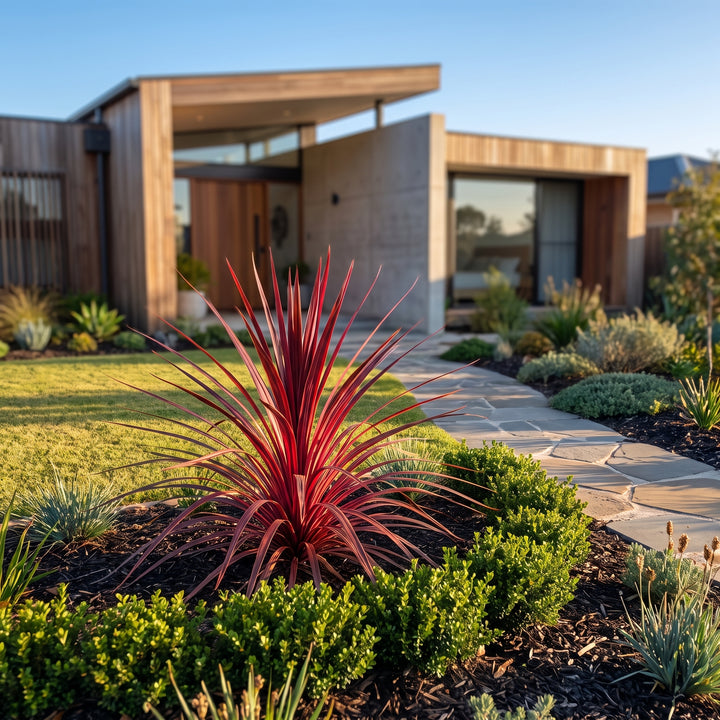
Cordyline Red Fountain PBR
From $24.95
Plant collection
Eighteen listings sit here and the titles do not sort them the way cold does. Four are Cordyline australis, the New Zealand cabbage tree, hardy through frost, coastal wind and cold winters once established and where the ground drains. Five are titled Cordyline fruticosa, the tropical ti plants, and at least two more are ti plants under a trade name. One is the native palm lily. The other eight carry trade names, not species, and six of the eight carry a frost warning on their own product page.
Cordyline australis Red Star goes into open ground in Hobart, Melbourne or on the tablelands, a bronze red rosette that slowly lifts onto a trunk. What kills it is wet airless soil at the roots: a plant looks fine for months, then goes soft at the base and topples inside a week. Plant high on a mound and break up any clay pan underneath. Colour deepens in full sun and washes towards green in shade. Black Knight is the near black form. Torbay Dazzler, listed twice in different pot grades, is the cream striped one. Hot dry inland sun scorches those pale margins, so give it afternoon shade there, and cut all green shoots out at the base. Dead leaves hang on rather than dropping, so strip and bin them once or twice a year: the fibre will wrap a mower shaft.
Cordyline fruticosa Rubra and Negra are one species read two ways, bright burgundy red and near black. Frost blackens the foliage and a cold wet winter rots the cane at soil level, so from Melbourne, Canberra and the Adelaide Hills south these live in pots that move under cover. Warmth solved, light sets the colour: harsh afternoon sun bleaches it and burns crisp patches through the leaf that never recover. Aim for morning sun with shade after midday. Electric Flash and Red Chocolate are titled as named forms, and both are ti plants with the same cold limit. Wintering them is covered in getting a tropical look in cooler districts, with more in tropical plants.
Cordyline stricta, the palm lily, is an eastern Australian rainforest plant, the one here that keeps its form in shade deep enough to make the coloured types stretch and fade. It takes light frost once established, but not a hard inland one, so in the coldest districts keep it in a pot. Mauve flower sprays open in spring, then dark berries that birds strip. In an open dry position the leaves yellow, the clump stops making new canes, and no fertiliser fixes that while the roots stay dry. Mass it at about three to the square metre so the canes read as a thicket. All parts of a cordyline are toxic to dogs and cats if chewed, berries included, worth weighing before massing it where a dog or a small child plays. The roots will not lift paving or split a pot. Kasper green is the other green one, a plain green form in 5L, no documented cultivar identity.
Cordylines reshoot from a hard cut cane, but wait for warm weather, late spring through summer. A cane cut in the cold sits wet and rots back. Offcuts strike in damp mix. Mealybug and scale hide where the leaf wraps the cane, so look there when growth stalls or the foliage turns sticky. Snails chew through the emerging central spear, and that damage lasts the life of the leaf.
Nine of the eighteen offer a 140mm pot. One listing starts at 100mm, the palm lily, and one runs up to 400mm. Six reach 300mm. None of the eight named forms is offered above a 250mm pot, and Electric Pink is the one that reaches it.
Choose from quality plants, compare options quickly, and use the filters to narrow the range by what matters most.
From $24.95

From $35.95

From $31.95

Cordyline fruticosa Negra (Cordyline terminalis)
From $16.95

From $29.95

From $16.95
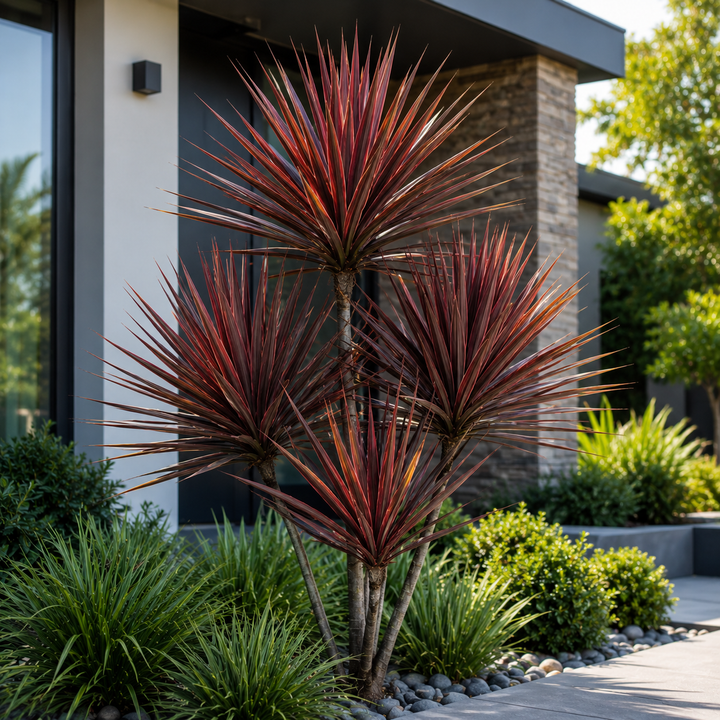
Cordyline australis Red Star
From $16.95

Cordyline fruticosa Rubra (Cordyline terminalis)
From $16.95

From $30.95

From $17.95

Cordyline stricta
From $16.95

Cordyline Torbay dazzler
From $30.95

From $29.95

Cordyline fruticosa Willys Gold (Cordyline terminalis)
From $18.95

Cordyline fruticosa Rumba (Cordyline terminalis)
From $35.95

Cordyline fruticosa Assorted (Cordyline terminalis)
From $29.95

Cordyline australis Torbay Dazzler
From $16.95

Cordyline aust. Black Knight
From $17.95
Use this collection to compare plants by size, style, growing conditions, and the result you want to create. Whether you are upgrading a garden, styling a patio, adding privacy, or refreshing an indoor space, choosing from a focused collection makes it easier to find the right fit.
Before ordering, consider light exposure, watering needs, mature size, and where the plant will be positioned. These details help you choose plants that look good now and continue performing over time.
Shopping within a dedicated collection helps you focus on plants that suit a specific use, look, or garden goal. Use the filters and product details to compare options, then choose the plant that best matches your space.