
Coast Banksia
Banksia integrifolia
From $16.95
Plant collection
Banksias do two separate jobs in an Australian garden. The shrubby species give you a nectar source through autumn and winter, when honeyeaters and lorikeets have the least else to work with, and they hold their shape in poor sandy ground without irrigation. The tree species give structure: knotted trunks, saw-toothed leaves and woody cones that stay on the plant for years. Buy them if you garden on sand, gravel or a well-drained slope, if you are on a coastal block dealing with salt wind, or if you want a native planting with real form rather than a soft green mass. Think twice if your soil stays wet through winter.
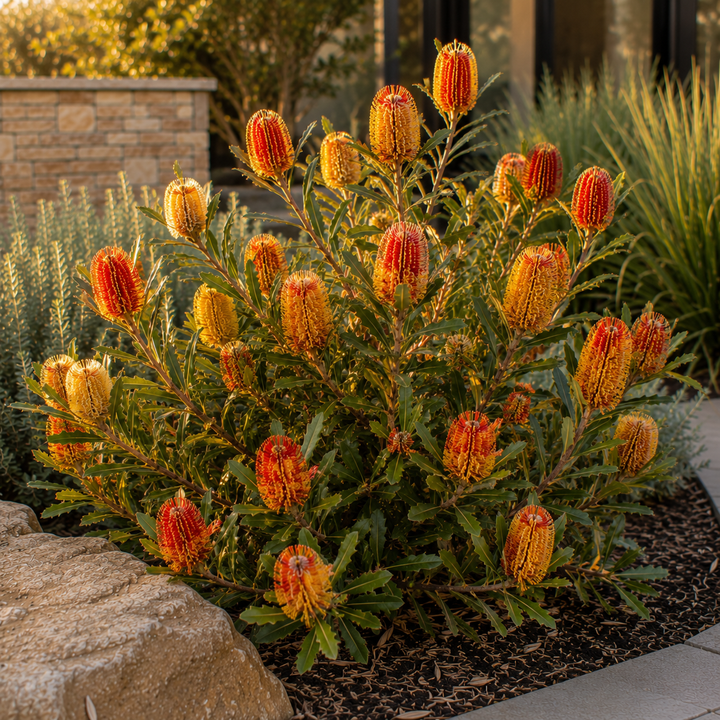
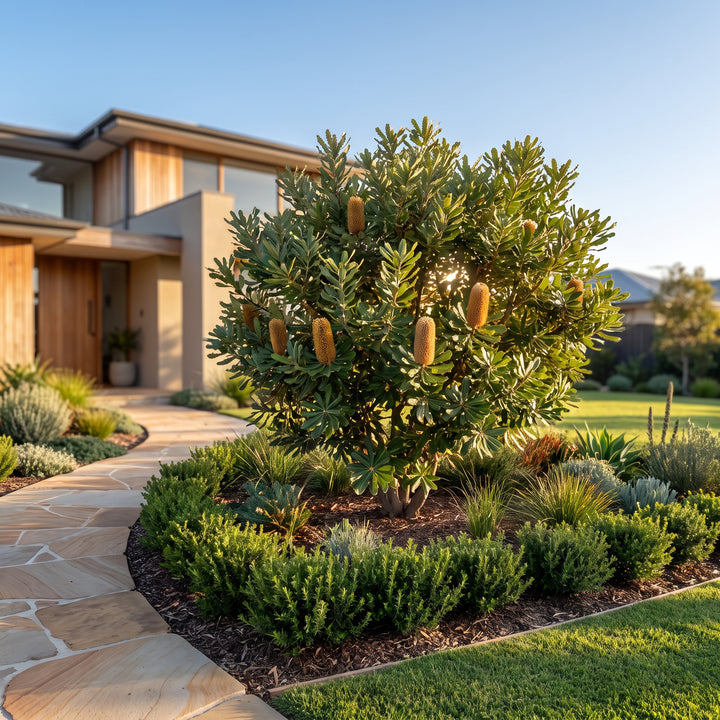
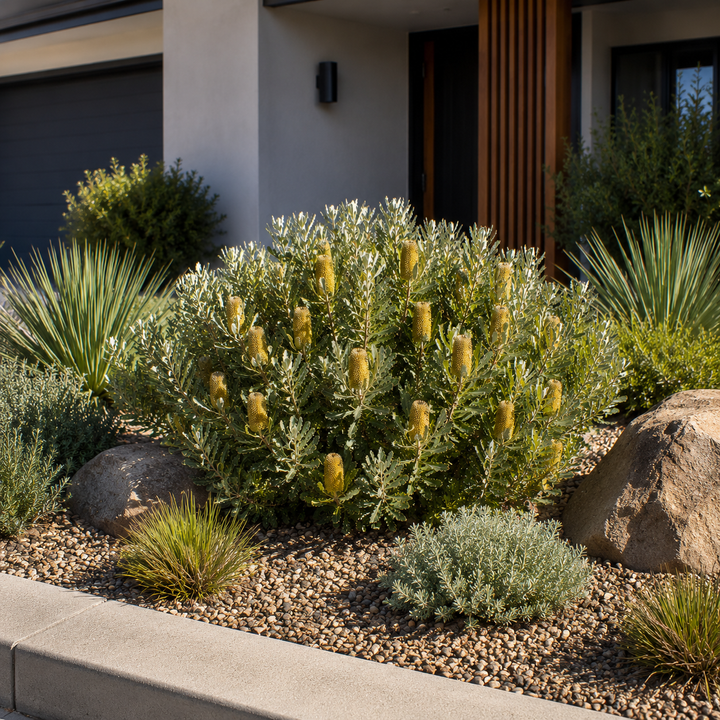
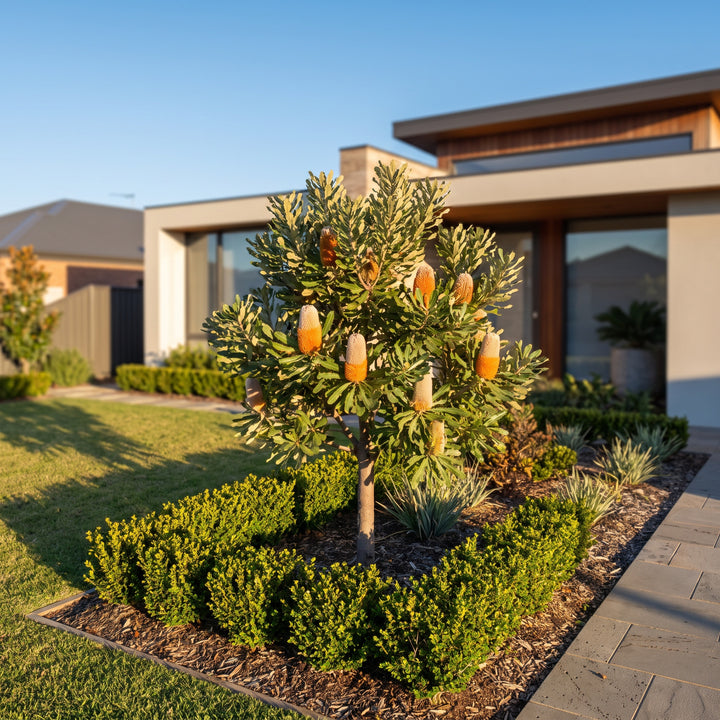
Take the shrubs first. Hairpin Banksia is the compact, rounded one, fine-leaved with gold and rust spikes held inside the bush, and it reshoots from a lignotuber after a hard cut. Heath Banksia is taller and much denser, with tiny heath-like foliage, so it is the one to reach for when you want a clipped native screen rather than a specimen. Silver Banksia, Banksia marginata, is the cold-tolerant choice, silver-backed leaves and short lemon spikes, and it suits southern and tablelands gardens that frost. At the tree end, Old Man Banksia is slow and sculptural, with grey corky bark, and it is worth placing as a single feature rather than in a row. Coast Banksia is the fast, forgiving one that copes with salt wind and sand, and it carries the widest size range here, 75mm tubes through to 600L, so you can plant a windbreak from starters or buy height. Sentinel is the narrow upright selection of that same species, sized 250mm to 330mm, for driveways and side boundaries. Acorn Banksia Dwarf keeps the orange acorn-shaped flower spikes of the West Australian species on a courtyard-sized plant, in 130mm and 140mm pots. Like the species it comes from, it wants deep sand and a dry summer.
Sharp drainage and full sun decide whether one of these lives. Plant high, on a raised mound if you are on clay, and mulch with coarse gravel or chunky bark kept clear of the trunk. Water weekly through the first summer, then taper off, because established plants want very little. What kills banksias in a home garden is rarely drought or frost. It is phosphorus. As Proteaceae, they carry dense proteoid root mats that take up phosphorus so efficiently that a normal dose of blood and bone, poultry manure, lawn food or general-purpose fertiliser builds to toxic levels. You get blackened leaf tips, yellowing between the veins, then sudden collapse, often months after the feeding, which is why the cause usually goes unnoticed. Use a low-phosphorus native formulation or feed nothing at all, and never plant one into a bed you fertilise for roses or vegetables. Prune lightly after flowering, into green growth, as most species will not reshoot from bare old wood.
The same soil and light suit grevilleas and bottlebrushes, and both flower in the gaps between banksia seasons. Browse the wider natives range for companion planting, or low-maintenance for other plants that get by on rainfall once settled. Every order ships farm-direct with flat $99 delivery across QLD, NSW, VIC, SA, ACT and WA, a $399 minimum order, and the 30-Day Healthy Plant Guarantee.
New to these plants? Read our guide: Growing banksias: phosphorus and drainage.
Choose from quality plants, compare options quickly, and use the filters to narrow the range by what matters most.
Banksia integrifolia
From $16.95

Banksia prionotes Dwarf
From $16.95
Banksia telmatiaea
From $16.95

Banksia Sessilis
From $16.95

Banksia spinulosa
From $17.95
Banksia marginata
From $17.95

Banksia ericifolia
From $18.95
Banksia prionotes
From $29.95

Banksia serrata
From $16.95

From $16.95

Banksia integrifolia Sentinel
From $59.95

Banksia attenuata
From $16.95
Use this collection to compare plants by size, style, growing conditions, and the result you want to create. Whether you are upgrading a garden, styling a patio, adding privacy, or refreshing an indoor space, choosing from a focused collection makes it easier to find the right fit.
Before ordering, consider light exposure, watering needs, mature size, and where the plant will be positioned. These details help you choose plants that look good now and continue performing over time.
Shopping within a dedicated collection helps you focus on plants that suit a specific use, look, or garden goal. Use the filters and product details to compare options, then choose the plant that best matches your space.