
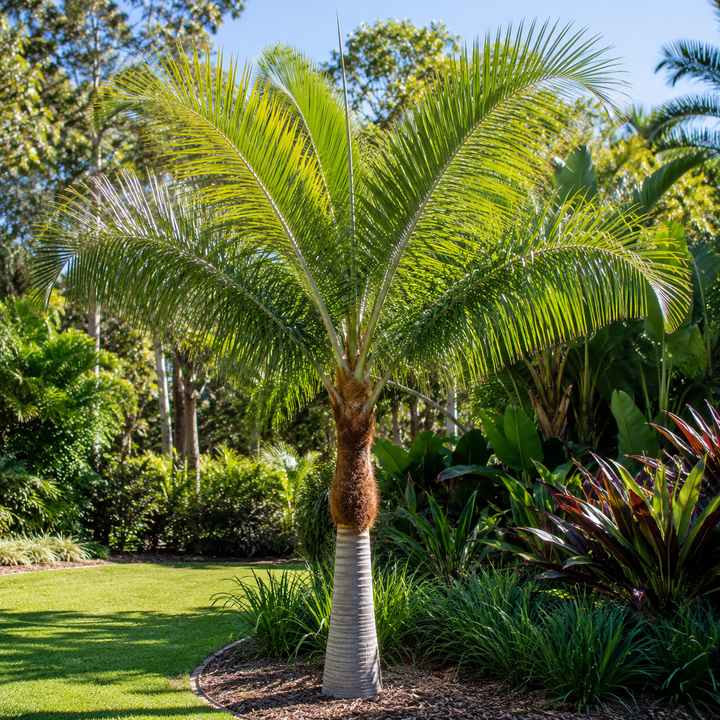
Teddy Bear Palm
Dypsis leptocheilos
From $43.95
Plant collection
Buy at this grade when the size of the tree is the point. A courtyard that has to read as established the week the scaffolding comes down. Who should leave this page alone: anyone whose only access is a side gate, anyone planting out a long boundary, and anyone shopping for growth. Plant a 200L and a 45L of the same species on the same morning and the small one makes new wood first.
200L is the size this page has in common, listed on 265 of the 352 lines here. Above that it thins fast: 119 lines run to 400L and 51 reach 1000L. A watered 200L ball goes past 200 kilos and a 1000L bag over a tonne. Neither is a wheelbarrow job. Measure the gate and the ground it has to cross. Powerlines and a verandah eave have stopped more big trees at the front fence than mud ever has.
These two jobs get muddled, expensively. A hedge is a clipped line: one cultivar, one grade, set close, cut twice a year. Stock grown on individually to 200L has individual shapes, and a row of it will not clip level for years. Order a hedge small and in one cultivar from hedging plants. Screening is the opposite problem. You are killing one sightline, from one seat, with something left loose. Three plants on that line beat twenty spread along a fence. Syzygium australe Resilience holds foliage low and takes Brisbane humidity where a clipped exotic sulks.
Slow ones, on ground that can hold them. A Himalayan cedar grows slowly enough that the farm years behind a big one are time you cannot buy any other way. It broadens with age and skirts its lower branches to the ground, so it belongs on acreage or a long driveway and not in a courtyard. Lifting those limbs to squeeze it in wrecks the shape for good.
Palms and pandanus are the other clear case: no taproot to wreck, and they shift at any age. Both come armed. The Carnarvon Fan Palm sells in a 750L and nothing smaller, carries hooked spines on the leaf stalks and sheds heavy fronds, so keep it clear of paths and pool surrounds. Pandanus utilis Red Edge runs to 400L, spines every leaf edge, and pushes prop roots outward as it ages, so give it a wide bed set back from paving and coping, not a strip anyone brushes past. Fast trees are the weak buy. Spotted Gum grows fast in the ground anyway and sells here from a 140mm pot up, and a gum held long enough to fill a big bag has often wound its roots round the wall. Buy gums small.
Open the outside of the root ball before the tree goes in the hole and cut any root circling the pot wall, because left whole they girdle the trunk three to five years on. Dig wide, then sit the ball at the depth it grew and no deeper. A 200L ball holds water and sheds it fast, because the bag is coarse bark and not soil. Dry it right through once and it starts repelling water; no sprinkler brings it back. Run a hose on top of the ball until it comes out the bottom, and keep at that for three summers, not one. Wind is the other one. A stake steadies a thin trunk and does nothing for a heavy head on a shallow root plate, which rocks the ball and shears off new roots. Use three guys off the lower trunk, or an anchor over the ball.
The same trees in bags you can shift sit in mature 100L trees and advanced trees.
Choose from quality plants, compare options quickly, and use the filters to narrow the range by what matters most.
Dypsis leptocheilos
From $43.95

Acer rubrum October Glory
From $48.95

Acer campestre Evelyn
From $69.95

Acer buergerianum
From $42.95
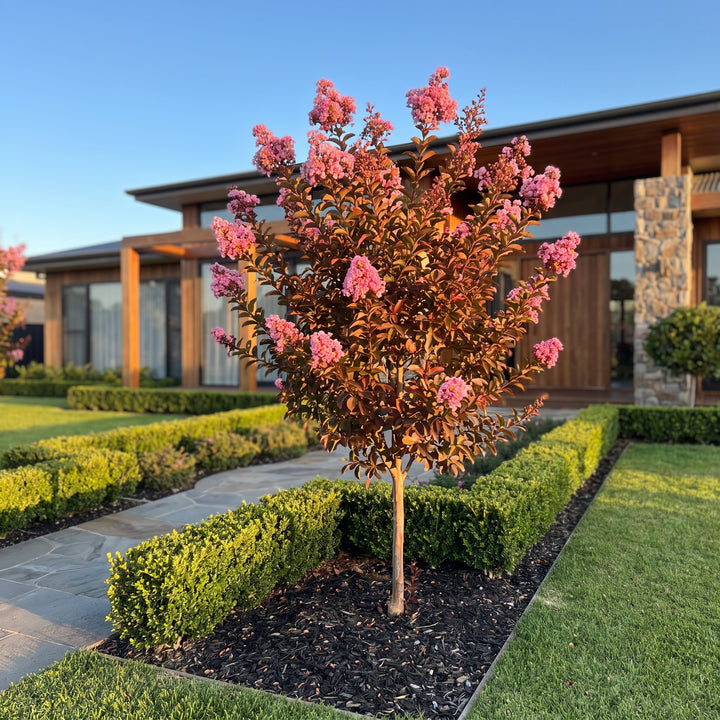
Lagerstroemia Sioux
From $32.95

Acer truncatum x. Warrenred Pacific Sunset
From $239

Pistacia chinensis
From $40.95

Magnolia grandiflora Teddy Bear
From $179

Quercus faginea
From $43.95
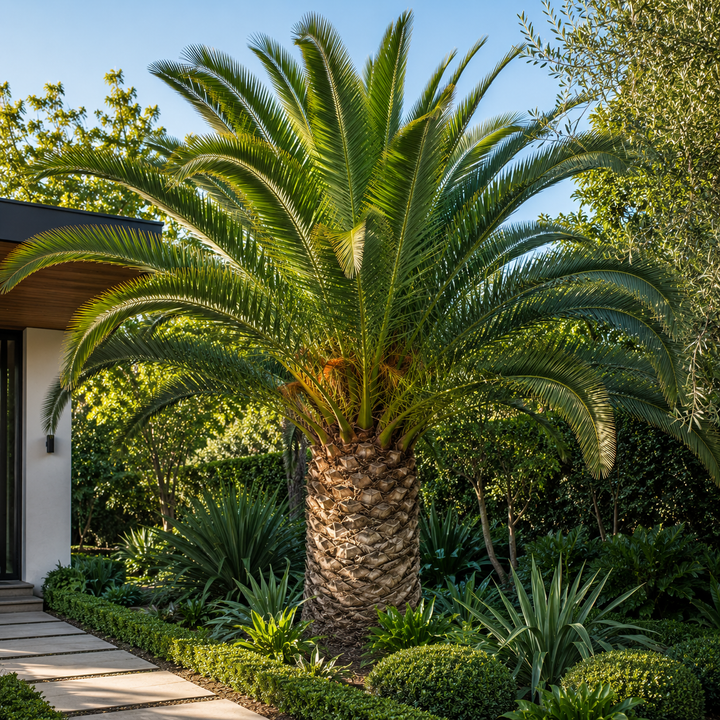
Phoenix canariensis
From $48.95

Ulmus parvifolia
From $119
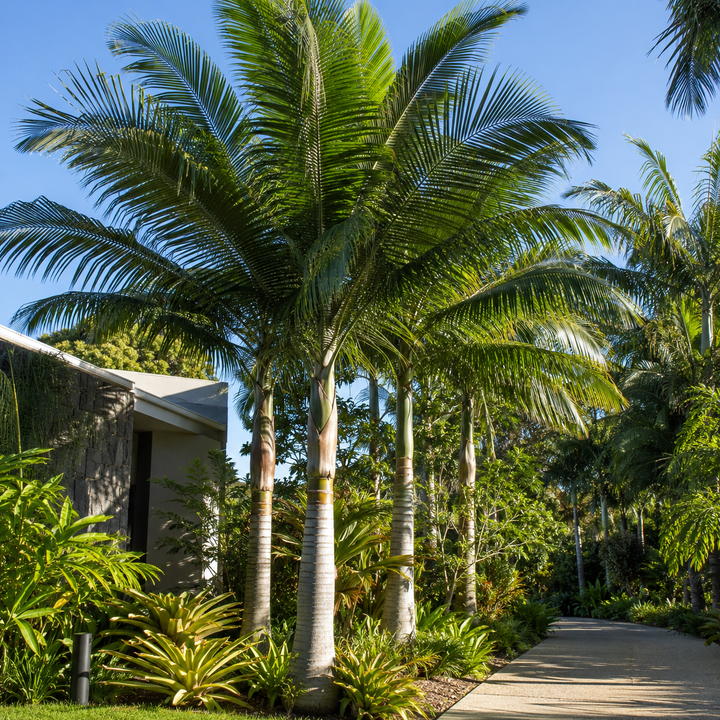
Archontophoenix alexandrae
From $16.95

Betula pendula
From $32.95

Waterhousea floribunda (Syzygium floribundum)
From $16.95

Dracaena marginata
From $16.95

Ficus macrophylla
From $30.95

From $49.95
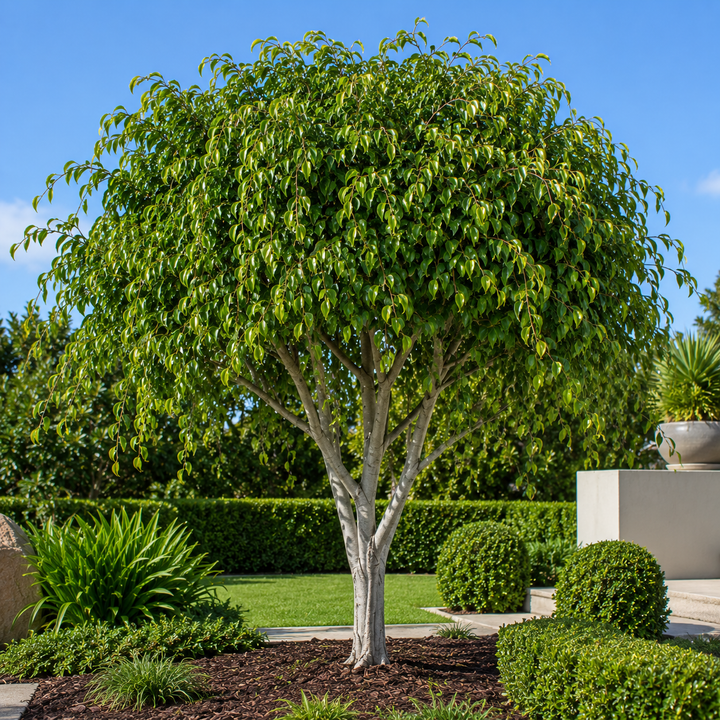
Ficus microcarpa hillii (Ficus hillii)
From $16.95

Pyrus calleryana Red Spire
From $50.95

Buxus sempervirens
From $16.95

Waterhousea floribunda Amaroo (Syzygium floribundum)
From $36.95

Elaeocarpus reticulatus
From $16.95

Quercus palustris
From $42.95

Hibiscus tiliaceus
From $309

Phoenix reclinata
From $99.95

Murraya paniculata (Murraya exotica)
From $16.95

Dypsis cabadae
From $65.95

Casuarina cunninghamiana
From $16.95

Syzygium australe Backyard Bliss (Eugenia australis)
From $45.95
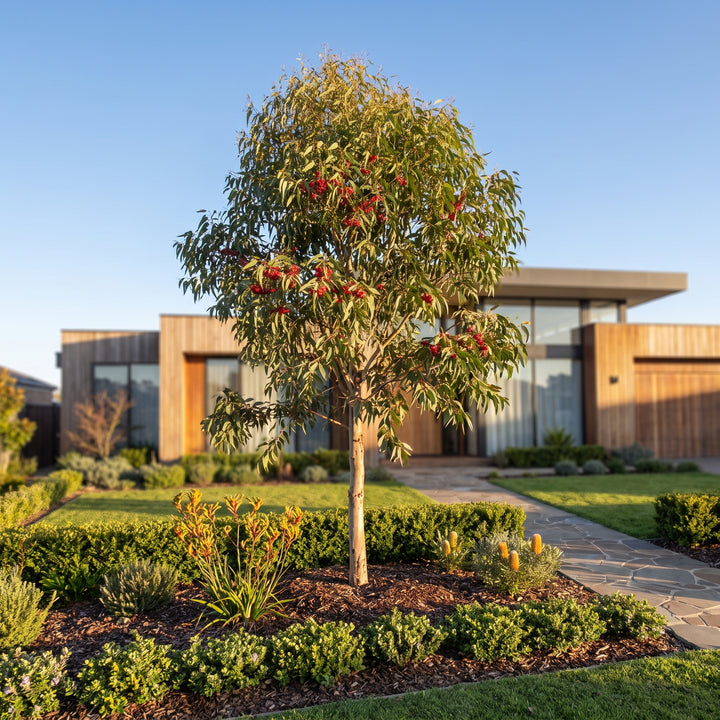
Eucalyptus leucoxylon Rosea
From $16.95

Magnolia grandiflora Coolwyn Gloss
From $149
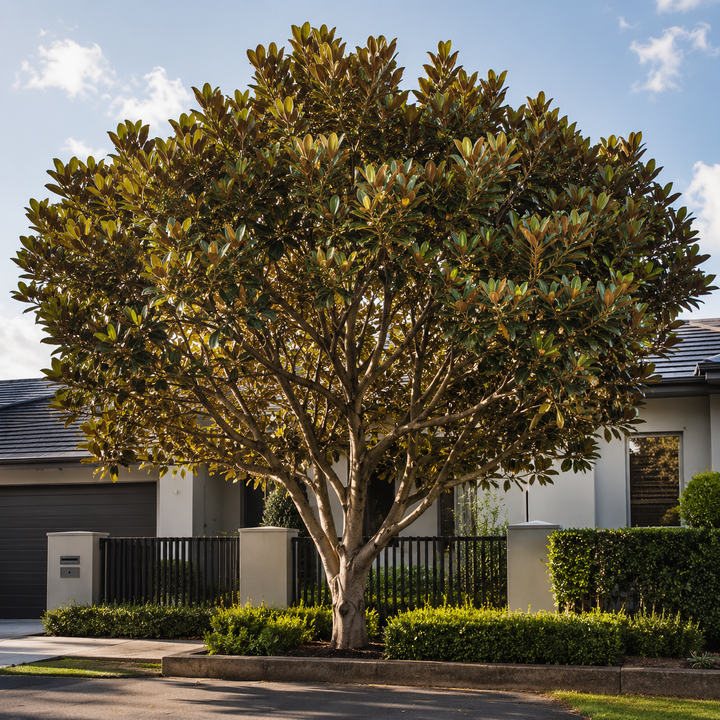
Ficus rubiginosa
From $149

Strelitzia nicolai
From $16.95

Acronychia imperforata
From $16.95

Howea forsteriana
From $52.95

Licuala ramsayi
From $27.95
Use this collection to compare plants by size, style, growing conditions, and the result you want to create. Whether you are upgrading a garden, styling a patio, adding privacy, or refreshing an indoor space, choosing from a focused collection makes it easier to find the right fit.
Before ordering, consider light exposure, watering needs, mature size, and where the plant will be positioned. These details help you choose plants that look good now and continue performing over time.
Shopping within a dedicated collection helps you focus on plants that suit a specific use, look, or garden goal. Use the filters and product details to compare options, then choose the plant that best matches your space.