
Kangaroo Paw
Anigozanthos Bush Fury PBR
From $30.95
Plant collection
Twenty-three kangaroo paws are listed here. Twenty-two are Anigozanthos; the odd one out is Macropidia fuliginosa, which sits in a genus by itself, its green flowers coated in black fur. The spec reads the same across all twenty-three: full sun, low water once established, moderate growth, and nectar on every one of them, with honeyeaters on the stems within days of the first flowers opening. Scale, lifespan, humidity tolerance and summer behaviour separate them.
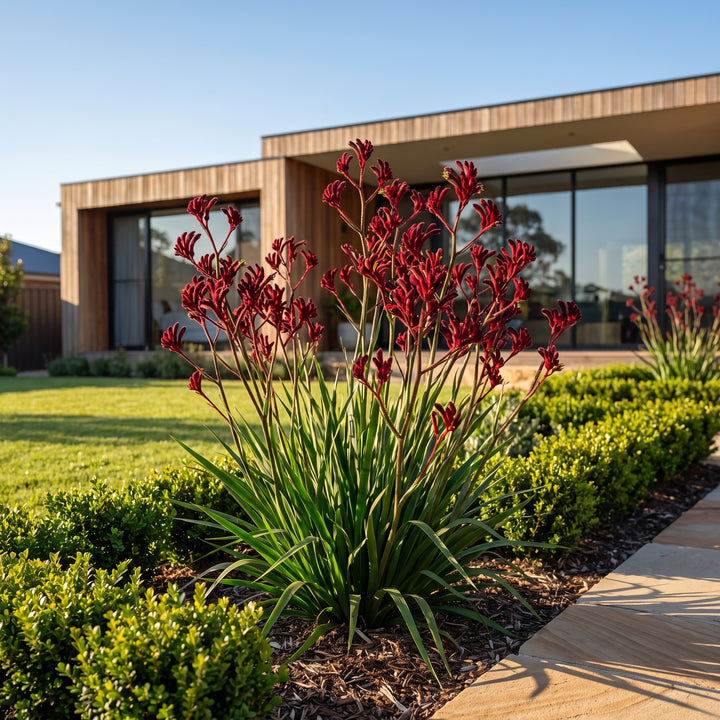
Ten listings carry a Bush name, mostly compact garden hybrids bred for repeat flowering and for more tolerance of ink spot than older strains. Bush Dance comes out of the Bush Gems program. Bush Ballad shows the type: deep red stems held just above the fan rather than towering over it, set roughly half a metre apart for a drift. The two Celebrations selections, Carnivale and Fireworks, were bred tighter again for containers. Compact hybrids are also shorter lived than the tall types, so plan on replanting every few years rather than nursing an ageing clump.
Anigozanthos flavidus and its red and yellow selections take more water, more humidity and heavier soil than the small hybrids, and ink spot troubles them far less. The yellow form shows leaf marking more obviously than the red does. Landscape Scarlet was selected for vigour in mass planting and holds its stems clear of the foliage. Kings Park Royale, despite the name, was bred for compact clumps and belongs at the front of a bed.
Anigozanthos Viridus is a small, fine leaved green flowered species off sandy Western Australian flats, wet through winter and bone dry in summer. It keeps that rhythm here, flowering in the cooler months and pulling back hard once heat arrives, so an empty patch in January means rest rather than failure. Macropidia is harder again and wants coarse sand, sun and a genuinely dry summer, so on the east coast a large pot of gritty sand based mix under cover beats a garden bed.
Shade is the first mistake. Growth goes soft, stems stretch and lean, flowering thins, and foliage stays wet long enough for disease to start. Wet ground is the second. Paws rot at the rhizome in clay that sits soggy through winter, so mound the bed, keep mulch pulled back off the crown, and water at ground level rather than over the leaves. Ink spot, the black blotching that runs up older fans, is the usual complaint in humid districts, and spraying does little. Cut the affected fan out at the base and bin it instead of trimming the tips. Frost burns leaf tips in cold inland gardens, though established flavidus clumps reshoot from the crown, so those are the forms for a frost district. Snails shear off new fans overnight, so check after rain.
One job carries the genus: the hard cut back. Once the main flush finishes, take spent stems and tired foliage down to about a hand's width above the ground. Feed straight after with a low phosphorus native fertiliser and water it in; rich soil, thick mulch on the crown and constant irrigation do more damage than a lean site. Divide congested clumps when the centre goes woody and bare. Paws drift well in front of grevilleas, a pairing our guide to bird attracting plants leans on.
Sixteen of the twenty-three offer a 140mm pot, about 1.5 litres of root ball, and thirteen start there. Nine offer 170mm, close to 2.7 litres. Five run to a 5L pot, larger again than the 200mm grade that three carry, which is what to buy for a clump already making stems. Big Red spans 100mm to 5L, so one variety covers a mass planting and a feature clump. Twelve listings come in a single size, so check the grade before the colour.
Choose from quality plants, compare options quickly, and use the filters to narrow the range by what matters most.
Anigozanthos Bush Fury PBR
From $30.95

Anigozanthos Viridus
From $16.95

Anigozanthos Bush Ballad PBR
From $17.95

Anigozanthos Landscape Scarlet PBR
From $30.95

Anigozanthos Celebrations Carnivale PBR
From $17.95

Anigozanthos Celebrations Fireworks PBR
From $17.95

Anigozanthos Frosty Yellow PBR
From $29.95

Anigozanthos Bush Zest PBR
From $17.95

Anigozanthos Bush Flare PBR
From $17.95

Macropidia fuliginosa
From $29.95

Anigozanthos Yellow Gem
From $17.95

Anigozanthos Pink Beauty
From $17.95

Anigozanthos flavidus Yellow
From $16.95

Anigozanthos flavidus Red
From $16.95

Anigozanthos flavidus
From $21.95

Anigozanthos Bush Pearl
From $18.95

Anigozanthos Bush Bonanza PBR
From $17.95

Anigozanthos Bush Fire PBR
From $24.95

Anigozanthos Bush Blitz PBR
From $17.95
Anigozanthos Bush Glow PBR
From $17.95

Anigozanthos Bush Dance PBR
From $24.95

Anigozanthos Kings Park Royale PBR
From $17.95

Anigozanthos Big Red
From $16.95
Use this collection to compare plants by size, style, growing conditions, and the result you want to create. Whether you are upgrading a garden, styling a patio, adding privacy, or refreshing an indoor space, choosing from a focused collection makes it easier to find the right fit.
Before ordering, consider light exposure, watering needs, mature size, and where the plant will be positioned. These details help you choose plants that look good now and continue performing over time.
Shopping within a dedicated collection helps you focus on plants that suit a specific use, look, or garden goal. Use the filters and product details to compare options, then choose the plant that best matches your space.