

Spider Flower
Grevillea spp. Assorted Standards
From $379
Plant collection
The plants in this collection were shaped on the farm before they were listed. Clipped balls and cones, lollipop standards held on a clear stem, espaliers trained flat and pleached panels grown as a hedge on legs. What you are paying for is the years of clipping and tying that produced the form, not the plant itself. Look here when you want a matched pair either side of a door, a repeating line down a path, or a screen that starts above fence height, without spending five years getting there. Trained starters begin at 200mm, and the largest pleached and standard figs run to 400L.
English Box - Buxus sempervirens Topiary Balls run from 250mm through to 100L, which makes six or ten of one shape at one size gettable. Japanese Box - Buxus microphylla japonica Topiary Cones do the same job with an upright profile, better for marking corners and gateways. For height, Hill's Weeping Fig - Ficus microcarpa Flash Pleached is trained as a flat panel above a clear trunk, which screens a neighbouring window without taking bed width; its roots are vigorous, so keep it well clear of paving, pipes and boundary walls, or hold it in a large container. Olive - Olea europaea Manzanillo Espaliers sit flat against a warm wall and hold grey foliage all year. Among the standards, Silver Birch - Betula pendula Youngii Weeping Birch Standards 1.8m gives a weeping head at a fixed height, though it is deciduous and reads as a bare frame through winter, and it wants a cool root run rather than a hot western courtyard. Sasanqua Camellia - Camellia sasanqua Jennifer Susan Standards flowers from autumn into early winter on a clipped ball head, which suits a pair of pots.
These are root-restricted plants, so water more often than an equivalent shrub in the ground, particularly through the first summer, and feed in early spring and again in late summer to keep the foliage dense enough to clip into. Leave the stake on a standard until the trunk holds the head steady in wind, and rub off any shoot that appears on the clear stem while it is still soft. Clip box when the foliage is dry rather than in muggy wet weather.
A skipped season of clipping is what undoes these forms. Box and ficus both push long growth through a warm, wet summer, and once the outline has run 200 to 300mm past the profile the instinct is to cut straight back to the original line. That cut lands in bare old wood, which box does not reshoot from reliably, so the gap tends to stay. Light clipping two or three times between spring and early autumn holds the form. Drop back to a clip every second year and you are unlikely to get the shape back, which is the commitment worth understanding before you order.
If you are building the surrounding planting, the untrained versions of the same plants are in buxus and hedges, larger untrained stock sits in advanced trees, and the screening figs are in figs and ficus. Every order ships farm-direct with flat $99 delivery across QLD, NSW, VIC, SA, ACT and WA, a $399 minimum order, and the 30-Day Healthy Plant Guarantee.
New to these plants? Read our guide: Topiary and standards: buying and keeping the shape.
Choose from quality plants, compare options quickly, and use the filters to narrow the range by what matters most.
Grevillea spp. Assorted Standards
From $379

Morus alba pendula Weeping Mulberry Standards
From $309

Mount Fuji Prunus serrulata x shirotae Standards
From $649

Prunus subhirtella pendula Alba White Weeping Cherry Standards
From $609

Malus domestica Echtermeyer Tall Standards (Malus pumila)
From $329

Casuarina glauca Cousin It Standards
From $229

Camellia sasanqua Pure Silk Standards
From $189

Camellia sasanqua Jennifer Susan Standards
From $189

Betula pendula Youngii Weeping Birch Standards 1.8m
From $269

Betula pendula Youngii Weeping Birch Standards 1.2m
From $199

Betula pendula Globe Lollipop Standards
From $289

Shimidsu Sakura Prunus serrulata Standards
From $649

Rose Charm Prunus persica pendula Standards
From $289

Olea europaea Manzanillo Espaliers
From $1,039

Acer palmatum dissectum Viridis Standards
From $279

Acer palmatum dissectum Green Standards
From $5,499

Acer palmatum dissectum Emerald Lace Standards
From $1,099
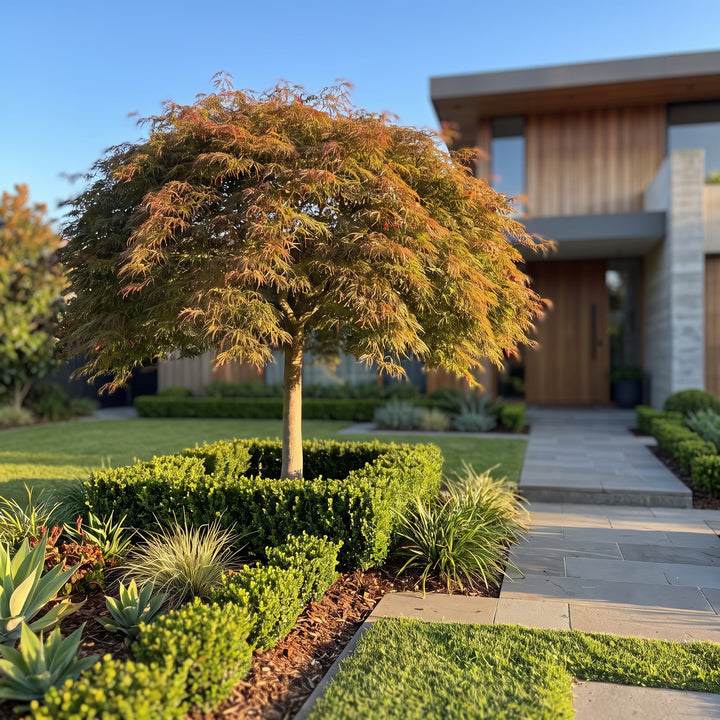
Acer palmatum dissectum Atropurpureum Weeping Maple Standards
From $149

Prunus serrulata Cheals Double Pink Weeping Cherry Standards
From $709

Prunus mume Pendula Weeping Apricot Pink Standards 1.8m
From $329

Ficus microcarpa hillii Standards (Ficus hillii)
From $109
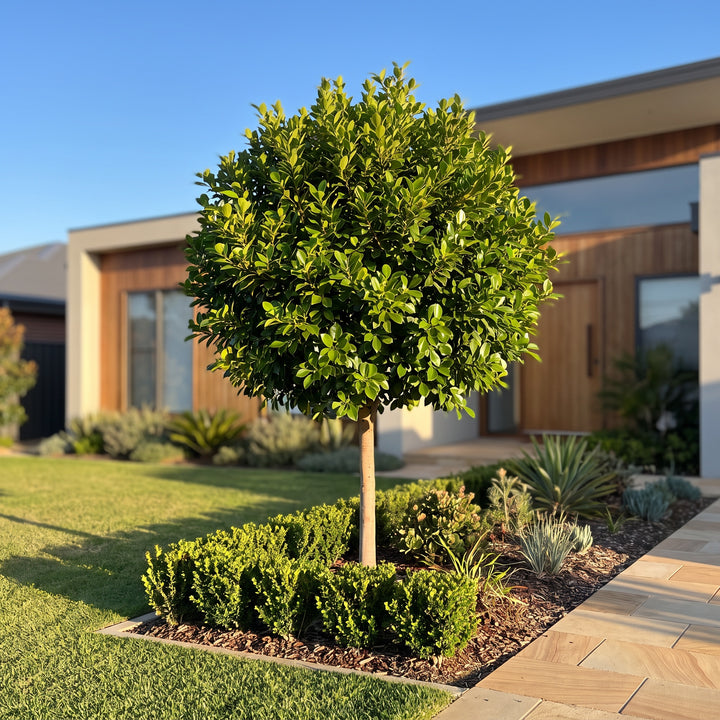
Ficus microcarpa Flash Standards (Ficus hillii)
From $50.95

Ficus microcarpa Flash Pleached (Ficus hillii)
From $139

Buxus microphylla Topiary Cones
From $3,309

Buxus microphylla microphylla Topiary Balls
From $849

Buxus microphylla japonica Topiary Cones
From $319

Buxus microphylla japonica Topiary Balls
From $139

Buxus microphylla japonica Topiary
From $55.95

Acer palmatum dissectum Ornatum Bronze Standards
From $279

Acer palmatum dissectum Orangeola Standards
From $189

Acer palmatum Atropurpureum Purple Maple Standards
From $299

Robinia pseudoacacia Inermis Standards
From $229

Plena Malus ioensis Standards
From $649

Buxus sempervirens Topiary Cones
From $149

Buxus sempervirens Topiary Balls
From $139
Use this collection to compare plants by size, style, growing conditions, and the result you want to create. Whether you are upgrading a garden, styling a patio, adding privacy, or refreshing an indoor space, choosing from a focused collection makes it easier to find the right fit.
Before ordering, consider light exposure, watering needs, mature size, and where the plant will be positioned. These details help you choose plants that look good now and continue performing over time.
Shopping within a dedicated collection helps you focus on plants that suit a specific use, look, or garden goal. Use the filters and product details to compare options, then choose the plant that best matches your space.