
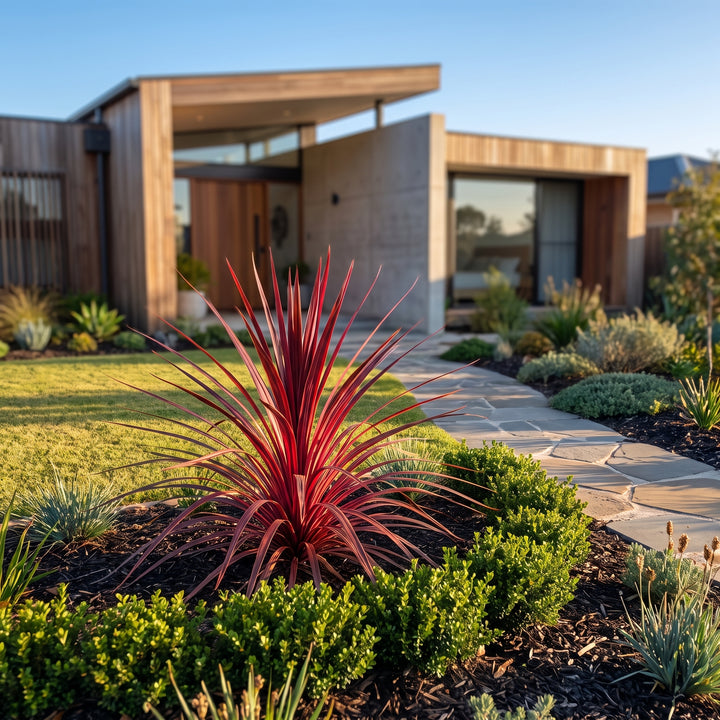
Cordyline Red Fountain PBR
From $24.95
Plant collection
Sixty-nine lines sit in this range, and it is four ranges wearing one label. Cordylines account for eighteen of them, cycads for eight, frangipani for seven and philodendrons for six. Everything else comes in small clusters: four lasiandras, four shell gingers, three elephant ears, three strelitzias, three cottonwood hibiscus, two cannas, then one-offs like Calathea lutea, Chinese ixora and an assorted banana. Work out which block you are in and most questions answer themselves.
All eighteen also sit in the cordyline range, and they split hard on cold. Four are Cordyline australis, the New Zealand cabbage tree, and Cordyline australis Red Star takes frost, coastal wind and cold winters provided the ground it stands in drains. Five are fruticosa Ti plants. On Cordyline fruticosa Negra a frost blackens the foliage and a cold wet winter rots the cane at soil level. Eight more are named forms, Fountain and Electric among the names, none offered above a 250mm pot. Six of the eight are frost tender, so south of the subtropics they are pot plants that shift under cover. Then Cordyline stricta, an eastern Australian rainforest species that takes light frost once established and keeps its form in shade deep enough to make the coloured types stretch and fade.
Cycads hold the bed together in August. The seed and trunk tissue are seriously toxic, and cycad poisoning is a real cause of liver failure in dogs, so a courtyard or a bed a dog can reach is the wrong place for any of them. Past that, Cycas revoluta runs twelve sizes, 140mm up to 400L. Cardboard palm (Zamia furfuracea) runs eight. There are three Dioon, two Ceratozamia, and Lepidozamia peroffskyana, which opens at 300mm and is established stock at every size.
Seven frangipanis, and they are not interchangeable. Plumeria obtusa is the tender one, belonging in Queensland, northern New South Wales or another frost free coastal pocket. Petite Pink is the dwarf, held in a single 200mm pot. Plumeria acuta opens at 90L. Four lasiandras split by scale. Tibouchina lepidota Alstonville is the large one, and it wants a hard prune the moment flowering finishes; Peace Baby, Groovy Baby and Mojo Baby stay small enough for a pot. Lasiandras want acid, free draining soil. On the calcareous sand behind the Perth coast they yellow between the veins, and a pot of acid mix is the answer.
Two hundred and fifty eight pot and bag sizes are listed across the range. The three that come up most are 200mm, 140mm and 300mm, and pot volume rises as a cube. A 140mm holds roughly 1.5 litres. A 300mm holds about fifteen. Ten lines open at a 35L bag or larger with no small pot at all, Plumeria acuta, Dioon edule and the green cottonwood hibiscus among them. Twenty-two run up to a 45L bag or beyond. Buy small where you are repeating a plant across ground, and a bag size only where one plant carries a corner alone.
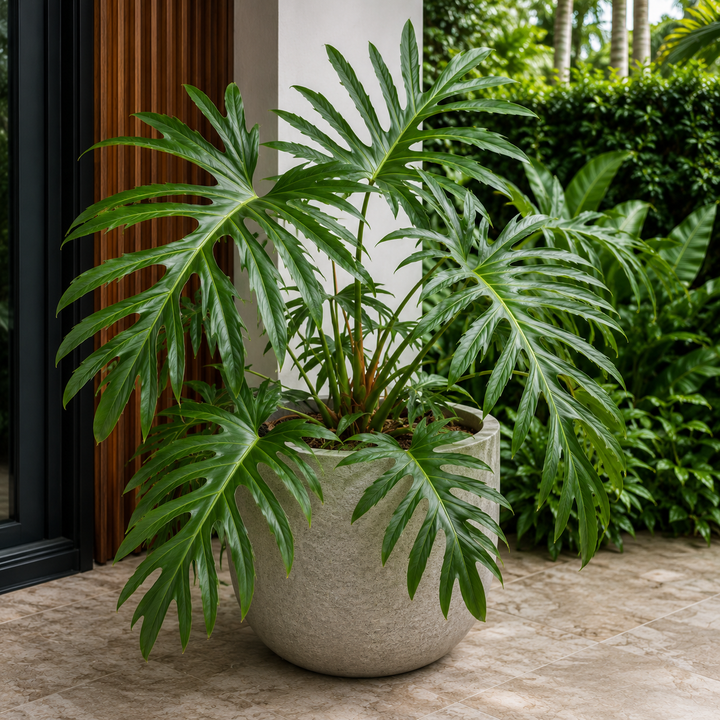
Eleven of the sixty-nine are also listed in the indoor range: every philodendron, every monstera, and Calathea lutea. South of the subtropics those are container plants that summer outdoors and come under cover for winter. Leopard tree (Caesalpinia ferrea) and the green cottonwood hibiscus (Hibiscus tiliaceus) are shade trees sized for acreage; the two burgundy Rubra forms stay here, one starting at a 140mm pot. Leopard tree roots run near the surface and lift paths, driveways and kerbs, and it self sows into bushland across south east Queensland, so give it a long setback or pick something else. For siting, drainage and getting a first winter behind you, read our guide to the tropical look in cooler districts.
Choose from quality plants, compare options quickly, and use the filters to narrow the range by what matters most.
From $24.95

From $16.95

Plumeria rubra Sunset
From $3,309
From $76.95

Canna Tropicanna Black TM
From $27.95

Assorted Musa spp. (Musa acuminata)
From $649

From $35.95

From $9,899

From $549

Alpinia zermumbet variegated
From $23.95

From $31.95

Cordyline aust. Black Knight
From $17.95

Monstera Monkey Mask
From $27.95

Hibiscus tiliaceus rubra
From $539

From $17.95

Heliconia psittacorum x spathocircinata Tropics
From $99.95

From $90.95
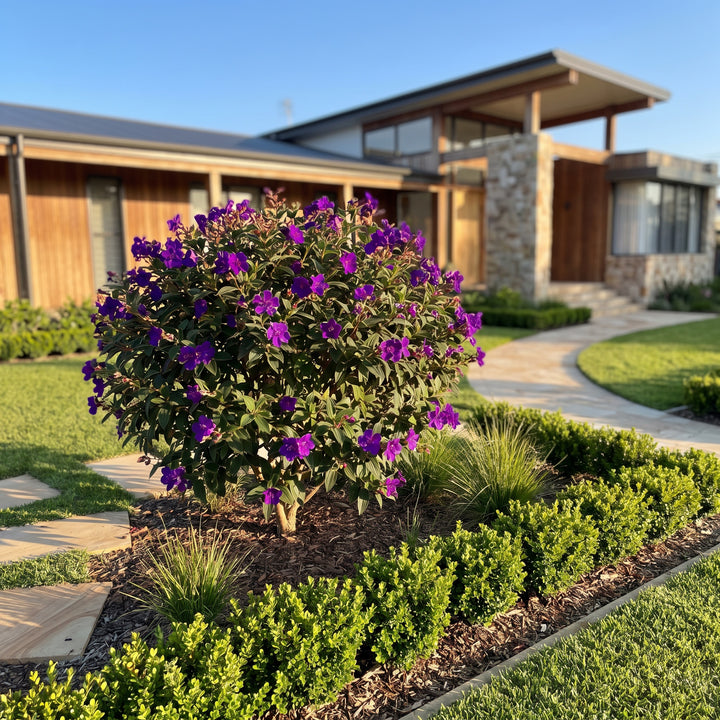
Tibouchina Groovy Baby (Pleroma)
From $17.95

Tibouchina Fantasy Flowers® Mojo Baby (Pleroma)
From $17.95

Plumeria Petite Pink
From $29.95

Alocasia macrorrhiza
From $30.95

Cordyline fruticosa Negra (Cordyline terminalis)
From $16.95

From $29.95

From $16.95

Canna Tropicanna TM
From $27.95
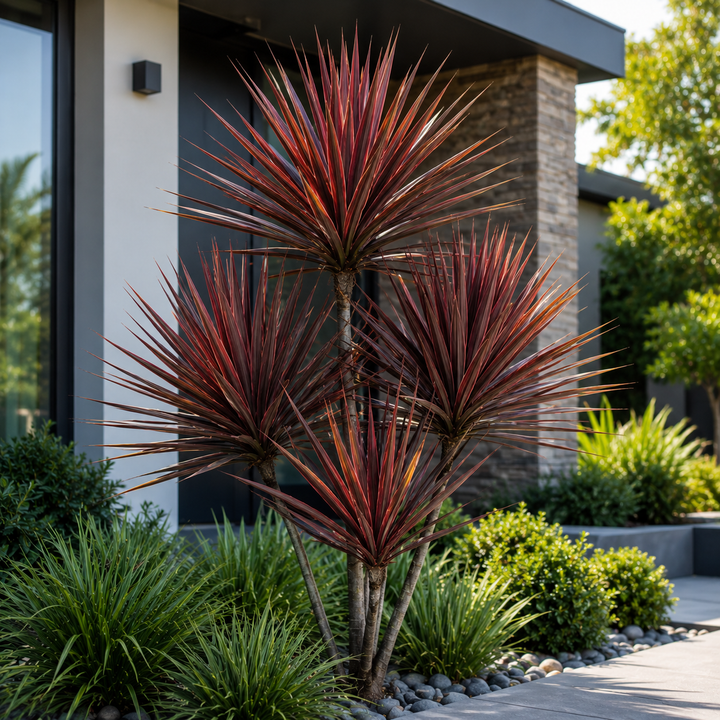
Cordyline australis Red Star
From $16.95

From $29.95

Tibouchina lepidota Alstonville (Pleroma)
From $22.95

From $56.95

Plumeria obtusa
From $99.95

Caesalpinia ferrea
From $16.95

Cordyline australis Torbay Dazzler
From $16.95

Codiaeum variegatum Assorted
From $16.95

Strelitzia parvifolia
From $199

Cordyline Torbay dazzler
From $30.95

Alocasia wentii
From $16.95
Use this collection to compare plants by size, style, growing conditions, and the result you want to create. Whether you are upgrading a garden, styling a patio, adding privacy, or refreshing an indoor space, choosing from a focused collection makes it easier to find the right fit.
Before ordering, consider light exposure, watering needs, mature size, and where the plant will be positioned. These details help you choose plants that look good now and continue performing over time.
Shopping within a dedicated collection helps you focus on plants that suit a specific use, look, or garden goal. Use the filters and product details to compare options, then choose the plant that best matches your space.