

Japanese Camellia
Camellia japonica Black Magic
From $50.95
Plant collection
A 100L tree has already spent several years on a farm before it reaches you. On the tree lines it clears head height with a formed canopy and a trunk you can wrap a hand around. Bottlebrush and juniper come at the same volume but stay clothed to the ground. Buy at this grade when the garden has to look finished on a date: a handover, a bare frontage on a new house, a window next door you would rather not stare at for four more years. Do not buy it for a long hedge run. For fast growth in year one, buy smaller. This size spends its first season underground, and smaller stock planted the same day often catches up.
100L is the commonest size here, but plenty of lines start smaller and some only begin at 150L or 200L. Pot volume climbs cubically, not by width, so the jump from a 400mm pot to a 100L bag is bigger than it sounds. A 400mm pot holds roughly 35 litres. The bag holds close to three times that in mix and root mass, and watered it can go past 100kg. Not a wheelbarrow job. Work out access before you order: gate width, the step onto the lawn, whether a machine can get to the hole. If not, it gets carried.
For a hard vertical along a drive, Italian cypress in the Nitschkes Needles form is genuinely narrow and holds that shape with almost no clipping. Leyland cypress is not that plant: broadly conical, a windbreak rather than a line, and it will not reshoot from bare old wood, so cutting a wide one back browns it out for good. For screening, low foliage matters more than height. Brush cherry holds up through Brisbane humidity where a clipped exotic sulks, but it wants steady moisture, and like water gum it will brown off and shed leaf on a dry verge. The natives here that genuinely run on rainfall are the eucalypts, tea trees and kurrajongs. Jerilderie Red runs on very little once established and suits an inland block, though its pods carry fine bristly hairs that itch, worth knowing before you plant one over a footpath. Hackberry is the deciduous shade option, quick, and takes Adelaide heat and the black clay out through Melbourne's west, though it seeds freely and birds spread it, so keep it off creek lines and out of the subtropical east.
A tree this size arrives with more canopy than its root ball can supply. That is transplant check. Everything you do at planting shortens it. Dig wide, and no deeper than the ball sat in the bag. A deep hole in clay backfilled with bagged compost becomes a sump, holding water around the trunk collar all winter until it rots. Break the sides up, backfill with the soil you took out. Stake low and loose against wind rock, ties that will not cut bark, off after twelve months so the trunk can stiffen. Then water: a slow deep soak twice a week through the first two summers, into the ball rather than over the mulch. Autumn suits mild coastal districts. In frost country like the Southern Highlands, wait for spring: an autumn-planted pot gets a few weeks before cold soil stops root growth, then sits all winter in wet ground with frost lifting the ball. Bare root deciduous stock is the exception, going in dormant over winter.
Where a budget has to stretch along a boundary, put 100L at the sightlines and fill between with semi advanced trees. The eye reads the run as established. Advanced trees covers the grades below, and super advanced 200L stock is the same trees in bigger bags.
Choose from quality plants, compare options quickly, and use the filters to narrow the range by what matters most.
Camellia japonica Black Magic
From $50.95

From $45.95

Calodendrum capense
From $42.95

Buxus sempervirens Topiary Balls
From $139

Buxus microphylla Topiary Cones
From $3,309

Buxus microphylla microphylla Topiary Balls
From $849

Buxus microphylla japonica Topiary Cones
From $319

Buxus microphylla japonica Topiary Balls
From $139

Buxus microphylla japonica Topiary
From $55.95

Brachychiton Jerilderie Red Grafted
From $35.95

Brachychiton compactus
From $42.95

Brachychiton acerifolius Illawara Flame Tree
From $16.95

Betula populifolia Royal Frost
From $269

Betula pendula Youngii Weeping Birch Standards 1.2m
From $199

Betula pendula Wades Golden
From $149

Betula pendula Fastigiata Upright/Pyramid
From $149

Betula pendula Dalecarlica Cut Leaf Birch
From $76.95

Betula pendula Alba Multi stem
From $1,879

From $659

Banksia serrata
From $16.95

Atractocarpus fitzalanii
From $19.95

From $329

Areca catechu
From $119

Archontophoenix cunninghamiana Multi planted
From $43.95

Archontophoenix alexandrae Multi planted
From $18.95

Arbutus unedo
From $65.95

Angophora floribunda
From $16.95

Alphitonia excelsa
From $259

Allocasuarina torulosa
From $17.95

Acmena smithii Purple Rain (Syzygium smithii)
From $16.95

Acmena smithii Forest Flame (Syzygium smithii)
From $16.95

Acer x. freemanii Jeffersred
From $43.95
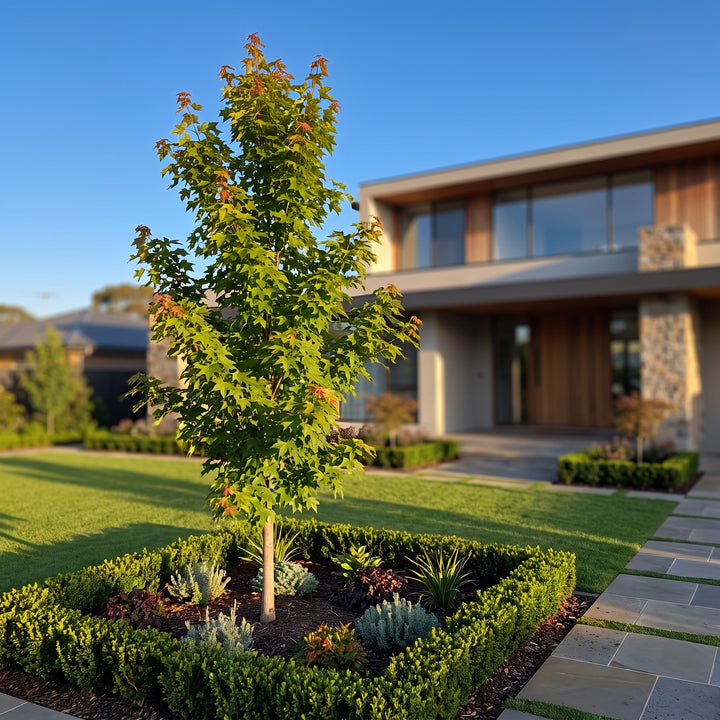
Acer truncatum x. Urban Sunset®
From $169

Acer truncatum x. Ruby Sunset
From $269

Acer platanoides Globosum
From $199

Acer platanoides Fairview
From $259
Use this collection to compare plants by size, style, growing conditions, and the result you want to create. Whether you are upgrading a garden, styling a patio, adding privacy, or refreshing an indoor space, choosing from a focused collection makes it easier to find the right fit.
Before ordering, consider light exposure, watering needs, mature size, and where the plant will be positioned. These details help you choose plants that look good now and continue performing over time.
Shopping within a dedicated collection helps you focus on plants that suit a specific use, look, or garden goal. Use the filters and product details to compare options, then choose the plant that best matches your space.