
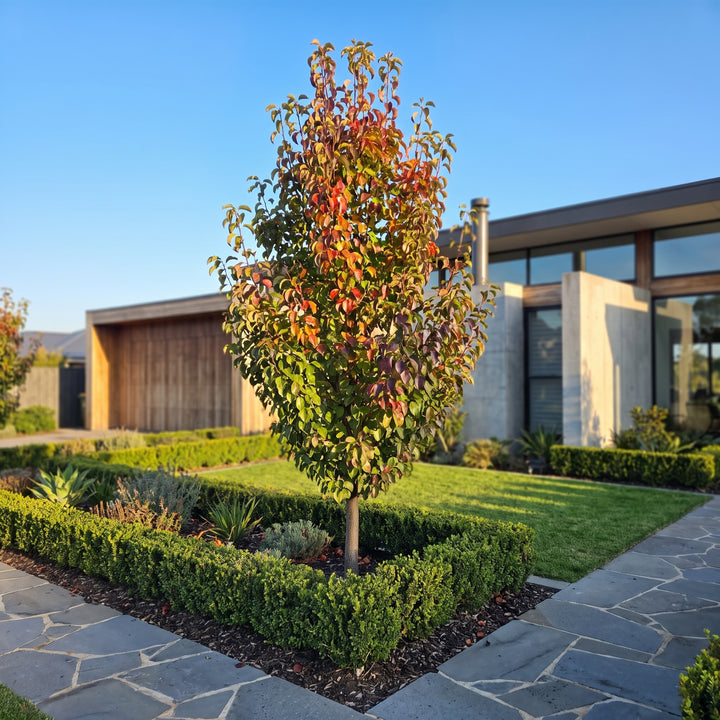
Ornamental Pear
Pyrus calleryana Aristocrat
From $50.95
Plant collection
Eighteen listings sit in this range, and every one is an ornamental Pyrus grown for blossom, foliage and form. None of them is an eating pear. The Pyrus communis and nashi selections live under fruit trees, and they want a compatible pollination partner within bee range and a genuinely cold winter before they crop properly. Nothing on this page is grown for a crop, so neither requirement applies. Winter chill still shapes the display. Manchurian pear flowers thinner and colours unreliably in the subtropics, and Winter Glow's late burgundy comes out muted and brief unless the autumn nights turn cold.
Ten of the eighteen carry Callery blood. That covers the calleryana selections most buyers arrive looking for, along with Javelin, a calleryana crossed with pyrifolia, and the Edgedell hybrid, which brings the same callery type seedling risk with it. Callery cultivars cross pollinate each other freely, birds carry the seed away, and seedlings have naturalised along creek lines and rail corridors in parts of Victoria and New South Wales. That is the sharpest version of the problem, but the exclusion runs to the genus. Check the local weed listing before a rural or public planting, and keep any pear on this page off a block backing onto bushland or a watercourse. The other eight are not spotless either. Manchurian pear raises seedlings in beds nearby, and both snow pear listings drop small hard fruit, so keep them off pale paving and well back from a pool surround.
Count plants rather than listings and the range shortens. Manchurian pear has two entries, one of them a single 90L line with no other grade behind it. Snow pear runs as a species listing and as Pyrus nivalis Grafted, where the graft is what holds the upright domed habit and the white felt true. Weeping silver pear splits further apart again. The straight Pyrus salicifolia is a twiggy, untidy dome that you either train up as a small standard or leave low as a large grey shrub, while Pyrus salicifolia Pendula is worked onto a stem and finishes as a wide mound with the branch tips sweeping the ground. Bradford runs twice as well: a full listing from a 180mm square pot through to 400L and bare root, and a two size grafted line carrying 400mm and 500mm only.
Sixteen of the eighteen offer a 400mm pot, so a mixed order specified at one grade usually lands there. Fourteen carry 100L, eleven carry 200L, and seven reach 400L or larger. Seven listings offer nothing under about 35 litres, Red Spire, Southworth Dancer, Javelin and Edgedell among them, so a screening run started from small stock is not on the table on those listings. The 180mm square pot on Bradford's full listing is the smallest container on the page. Capital runs from a 200mm pot up to 750L, and Cleveland Select covers small containers through to very large specimens. Bare root appears on seven listings only, five Callery selections plus Manchurian pear and snow pear, while the other eleven are container stock and go in whenever there is water behind them.
Southworth Dancer is Pyrus betulaefolia, not a Callery pear at all, with a narrower, longer leaf that opens grey and downy. Betulaefolia is the species nurseries have long grafted other pears onto, because it copes with heavier, wetter and more alkaline ground than most pears will, which makes it the first one to look at for a damp clay corner. With the Pendula, moving up a pot size buys width rather than height, since the head is already worked onto its stem. For which silhouette suits the space, the formative pruning it needs and the pests that arrive with it, read choosing an ornamental pear.
Choose from quality plants, compare options quickly, and use the filters to narrow the range by what matters most.
Pyrus calleryana Aristocrat
From $50.95

Pyrus fauriei Westwood Korean Sun
From $149

Pyrus calleryana Bradford
From $39.95

Pyrus calleryana Capital
From $83.95

Pyrus calleryana Winter Glow
From $50.95

Pyrus calleryana Chanticleer
From $149

Pyrus calleryana Red Spire
From $50.95

Pyrus ussuriensis
From $50.95

Pyrus nivalis
From $37.95

Pyrus betulaefolia Southworth Dancer
From $249

Pyrus calleryana Cleveland Select
From $50.95

Pyrus x. Edgewood Edgedell Pear
From $219
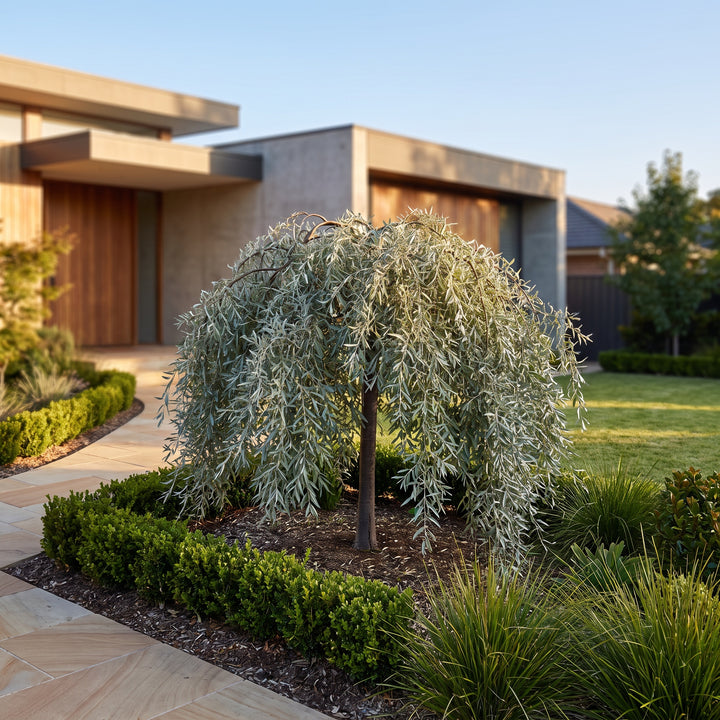
Pyrus salicifolia Pendula
From $189

Pyrus salicifolia
From $269

Pyrus nivalis Grafted
From $149

Pyrus calleryana x pyrifolia NCPX1 Javelin
From $219

Pyrus calleryana Bradford Grafted
From $199
Use this collection to compare plants by size, style, growing conditions, and the result you want to create. Whether you are upgrading a garden, styling a patio, adding privacy, or refreshing an indoor space, choosing from a focused collection makes it easier to find the right fit.
Before ordering, consider light exposure, watering needs, mature size, and where the plant will be positioned. These details help you choose plants that look good now and continue performing over time.
Shopping within a dedicated collection helps you focus on plants that suit a specific use, look, or garden goal. Use the filters and product details to compare options, then choose the plant that best matches your space.