

Flax Lily
Dianella Tasma PBR Wyeena
From $17.95
Plant collection
Native does not mean low care, and it does not mean local. This range is stocked for gardens, not revegetation: named forms grown to hold a shape in a bed. It suits you if you want flower through autumn and winter, honeyeaters in the yard, and a planting that lives on rainfall once established. It suits you less if you garden on heavy clay that stays wet and will not raise the bed, or if the spot is a shaded courtyard. Most of these plants come from country poorer than your backyard. The usual way people kill them is kindness.
Split the range by provenance and it gets simpler. The West Australian and South Australian species grew up on sharp sand under a dry summer. They mind humidity far more than drought. Gilt Dragon grevillea, woolly bush, parrot bush and the coastal daisy bushes sit in that group. On the sand around Perth they are hard to kill. In Brisbane, or anywhere the air stays wet through February, they go eventually, usually to root rot after a run of storms. Eastern species handle that humidity better: lomandra, dianella, hardenbergia, water gum and the Dawson River Weeper bottlebrush, a Queensland river plant. Cold gardens differ again. Out past Ballarat or up in the Southern Highlands, frost thins the warm-climate natives fast, while poa tussock, westringia, the tougher grevilleas and hairpin banksia carry on.
A native planting reads as designed or as scrub depending on the low layer. Two different tools do that job. Strappy plants give you upright arching leaf: Tanika lomandra, dianella and poa tussock, planted in drifts of nine or fifteen rather than dotted about. Creeping boobialla is the other, a flat mat of small fleshy leaves for banks and edges. Most of the low layer arrives in 130mm and 140mm pots, about a litre and a half. Shrubs reward buying bigger. A grevillea or westringia in 5L, roughly a 200mm pot, is a year ahead where a screen matters, and a hairpin banksia in 300mm is about 15 litres of root, a substantial plant, not a starter. Trees need the most thought. A kurrajong in 30L is already a two-person lift, and its seed pods are lined with fine hairs that itch, so sweep them up rather than let children split them open.
Phosphorus is the one nobody expects. Grevillea, banksia, hakea and woolly bush run proteoid root mats that scavenge it so efficiently that one handful of blood and bone or lawn food builds to a toxic dose. Leaf tips blacken, the leaf yellows between the veins, then the plant collapses months later. Feed those four a low-phosphorus native formulation, or nothing at all. Drainage does most of the rest. On the basalt clay through Melbourne's west, or shale country west of Sydney, plant high: mound the bed, gypsum the clay, mulch coarse. Do not dig a pit in clay, fill it with potting mix and call it improved. You have built a bucket. Pruning is where they are alike. Grevillea, hakea, westringia and paperbark reshoot poorly from bare old wood: cut past the green growth and you get grey sticks. Tip prune after each flowering from the first season, letting the cut line move outward slightly each year. Bottlebrush varies by cultivar, and the compact selections are the ones that hold a hole. Banksia spinulosa carries a lignotuber and comes back slowly. Hairpin banksia does not, regenerating from seed.
If one genus has your attention, the deeper ranges sit beside this page. Grevillea runs from groundcover forms up through shrubs to silky oak, which belongs on acreage rather than a suburban block, banksias cover sand, coastal wind and winter nectar, and gum trees hold the flowering eucalypts and big shade trees.
Choose from quality plants, compare options quickly, and use the filters to narrow the range by what matters most.
Dianella Tasma PBR Wyeena
From $17.95

Goodenia ovata Gold Cover
From $16.95

Melaleuca viridiflora (Callistemon)
From $29.95

Adenanthos sericea Select (Adenanthos sericeus)
From $16.95

Callistemon citrinus White Anzac (Melaleuca citrina)
From $16.95

Eucalyptus erythronema
From $149

Acacia cognata Copper Tips
From $309

Tristaniopsis LusciousPBR (Tristania)
From $539

Lomandra Bloomin Bloo
From $16.95

Melaleuca leu. Fine Leaf (Callistemon)
From $29.95

Eucalyptus gomphocephala
From $29.95

Westringia 'WES06' PBR Low Horizon TM
From $16.95

Brachychiton Magenta Bells Grafted
From $129

Lomandra longifolia Empress
From $29.95

Dianella revoluta
From $16.95

Lomandra Little Lime PBR
From $30.95

Melaleuca rhaphiophylla (Callistemon)
From $29.95

Eucalyptus sideroxylon
From $63.95

Lomandra 'SIR5' PBR Wingarra TM
From $17.95

Eremophila Crazy Mac
From $16.95

Eucalyptus porosa
From $149

Dianella 'DRG04' PBR Revelation
From $17.95

Westringia Zena
From $29.95
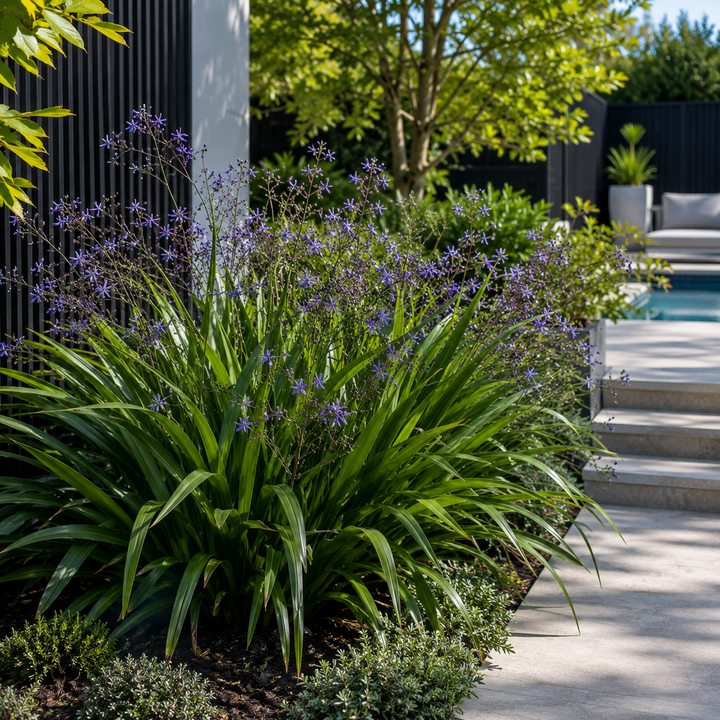
Dianella caerulea
From $16.95

Dianella Clarity Blue PBR
From $17.95

Eremophila Pink Pantha
From $16.95

Dianella Blaze PBR
From $17.95

Eucalyptus kitsoniana
From $199

Leptospermum Pink Cascade
From $16.95

Melaleuca leu. Broad Leaf (Callistemon)
From $29.95

Westringia Wynyabbie Gem
From $16.95

Eucalyptus bridgesiana
From $16.95

Ficinia nodosa Nobby Club Rush (Isolepis nodosa)
From $16.95

Lomandra Lime Tuff Tissue culture
From $16.95

Eucalyptus Victrix Snow Queen
From $199

Corymbia ficifolia Baby Orange Grafted (Eucalyptus ficifolia)
From $249
Use this collection to compare plants by size, style, growing conditions, and the result you want to create. Whether you are upgrading a garden, styling a patio, adding privacy, or refreshing an indoor space, choosing from a focused collection makes it easier to find the right fit.
Before ordering, consider light exposure, watering needs, mature size, and where the plant will be positioned. These details help you choose plants that look good now and continue performing over time.
Shopping within a dedicated collection helps you focus on plants that suit a specific use, look, or garden goal. Use the filters and product details to compare options, then choose the plant that best matches your space.