
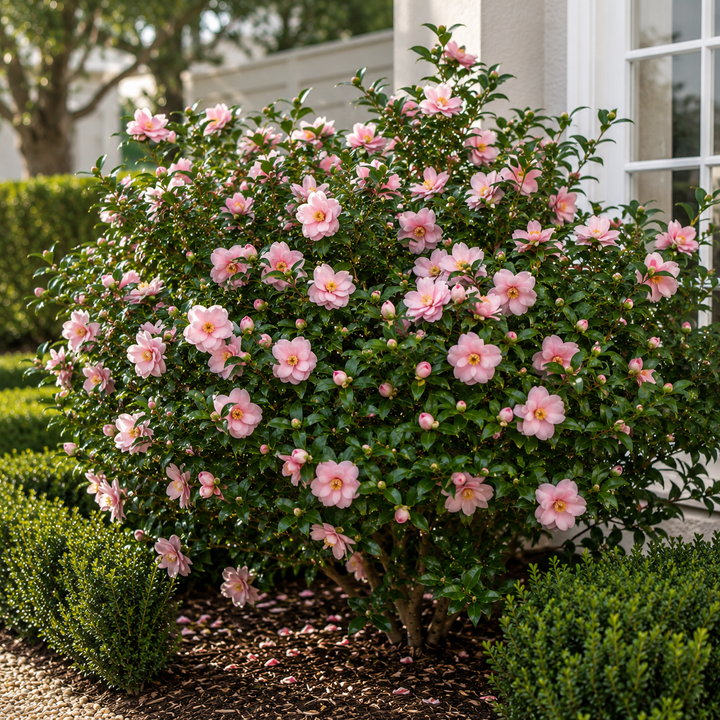
Sasanqua Camellia
Camellia sasanqua Beatrice Emily
From $16.95
Plant collection
This range is for adding colour and scent to a garden that already has green structure. It runs from 130mm perennials through shrubs and climbers to semi-mature flowering trees, and it is where to shop for honeyeaters and bees. Flowers are seasonal. Most carry a flush for a few weeks, then go back to being a green shrub. If that will bother you, buy hedging and feature trees first.
Grevilleas, banksias, kangaroo paws and emu bushes all want open drainage and full sun, but not the same soil. Perth's coastal sands are calcareous, and most eastern banksias and many grevilleas yellow off on lime inside a season. Parrot bush is the West Australian exception, a species that grew up on limestone, and eremophila copes with it too. Put those same plants in unmounded black clay in Melbourne's west and they sulk through winter, then rot in the second wet spring. Camellias, gardenias and coral bells come from the other camp: part shade, steady moisture, mulch that never fully dries, and acid soil for the first two. Humidity narrows the list again. Brisbane grows frangipani, heliconia and gardenia without much effort, and quietly kills lavender and the dry-country West Australian natives with fungus. Frangipani and heliconia die in a hard frost at any age.
Nearly everyone buys whatever is in flower on the day they shop. Do that three times and the garden peaks for six weeks, then sits flat. Work off a calendar. Sasanqua camellias and hairpin banksia take autumn, japonica camellias hold the cold months, and purple coral pea covers a fence in late winter when little else is doing anything. Kangaroo paws, pandorea and bottlebrush run spring into summer, gardenia holds the heat, and crepe myrtle closes out late summer. Grevillea repeats through most of the year. Eremophila flowers winter into spring, then on and off.
130mm and 140mm cover two different things. One is young perennials and ground covers, swan river daisy, fan flower and daylily among them, quick enough to mass plant a border. Coral bells share those pots but grow slow to moderate, earning their place on leaf colour. The other is native shrubs, and they sit across the band: parrot bush and several of the small grevilleas at 130mm, the emu bushes from 130mm up to 5L. Across the range, 140mm is the commonest entry size. 170mm and 200mm buys a shrub with its framework already built, which matters for camellia and gardenia, both slow to moderate, where a small plant means a long wait. A 300mm pot holds roughly fifteen litres of root ball. Crepe myrtle runs the whole ladder, 140mm up to bagged specimens for a driveway.
Drainage, mostly. Lavender, kangaroo paw and the dry-country shrubs die of wet feet, usually inside a fortnight of heavy rain. Plant high, mound clay, keep mulch off the stem. The failure people do not see coming is phosphorus. Grevilleas and banksias take it up through dense proteoid roots so efficiently that one handful of blood and bone or lawn food builds to a toxic level, showing months later as blackened leaf tips. Use a low-phosphorus native fertiliser on those two, or none. Kangaroo paws are the opposite case, starved by gardeners who assume every native is the same. They are hungry plants, and sparse flower spikes often mean an underfed one. Before planting near children or pets: daylily causes kidney failure in cats, pieris is seriously toxic if eaten, and agapanthus and frangipani sap irritate skin.
If your list is coming out mostly native, the wider Australian natives range carries the trees, grasses and ground covers to build around it. Start at low maintenance plants if water or time is the constraint.
Choose from quality plants, compare options quickly, and use the filters to narrow the range by what matters most.
Camellia sasanqua Beatrice Emily
From $16.95

From $29.95

Corymbia ficifolia Baby Orange Grafted (Eucalyptus ficifolia)
From $249

Lagerstroemia fauriei Kiowa
From $249

Osteospermum Serenity Bronze (Dimorphotheca)
From $16.95
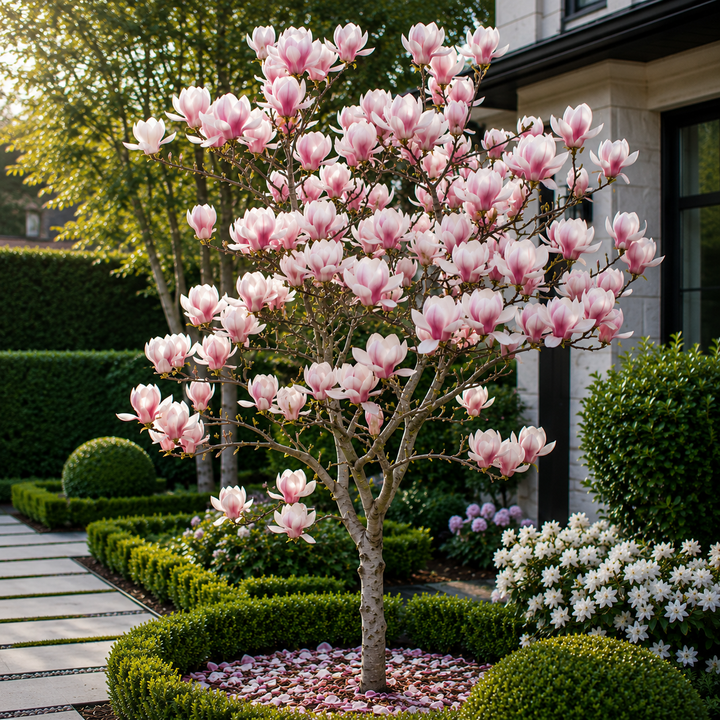
From $71.95

Camellia japonica Pink Gold
From $59.95

From $29.95

Metrosideros collina Little Dugald
From $16.95
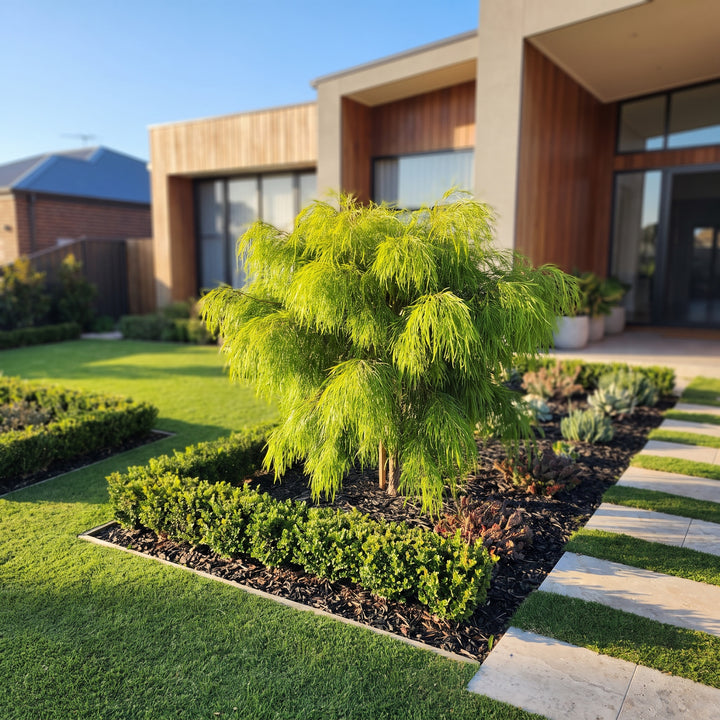
Acacia cognata Limelight PBR
From $16.95

Coleonema Brilliant Pink PBR (Diosma)
From $29.95

Leptospermum petersonii (Leptospermum citratum)
From $16.95

Acacia pendula
From $189

Leptospermum Little Lemon Scents PBR
From $16.95

Lagerstroemia Diamonds in the Dark Red Hot
From $29.95

Prunus subhirtella pendula Alba White Weeping Cherry Standards
From $609

Plumeria obtusa
From $99.95

Hardenbergia violacea White Out
From $17.95

Coleonema Compactum (Diosma)
From $16.95

Osteospermum 3D Double Yellow TM (Dimorphotheca)
From $21.95

From $21.95

Callistemon citrinus (Melaleuca citrina)
From $16.95

Argyranthemum Sunday Best PBR (Chrysanthemum frutescens)
From $21.95

Armeria maritima Pink
From $16.95

Callistemon 'LC01' PBR MacArthur TM (Melaleuca)
From $63.95

Rhaphiolepis indica (Raphiolepis indica)
From $16.95
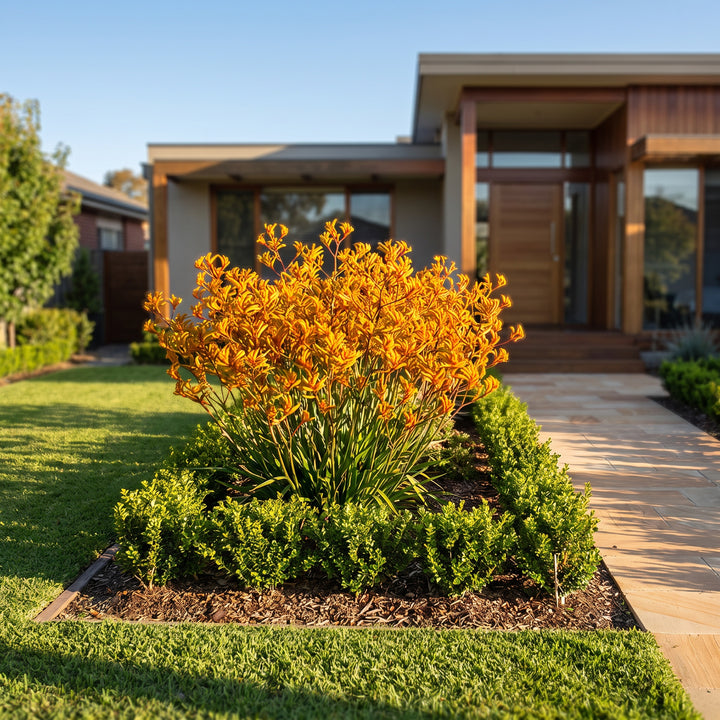
Anigozanthos Bush Glow PBR
From $17.95

Cercis canadensis Merlot
From $91.95

Camellia japonica Black Tie
From $36.95

Camellia japonica Roger Hall
From $40.95

From $16.95

Cercis chinensis Faerie Queen
From $199

From $36.95

Hardenbergia Happy Wanderer
From $29.95

Prunus serrulata Cheals Double Pink Weeping Cherry
From $119

Camellia japonica Silver Waves
From $40.95
Use this collection to compare plants by size, style, growing conditions, and the result you want to create. Whether you are upgrading a garden, styling a patio, adding privacy, or refreshing an indoor space, choosing from a focused collection makes it easier to find the right fit.
Before ordering, consider light exposure, watering needs, mature size, and where the plant will be positioned. These details help you choose plants that look good now and continue performing over time.
Shopping within a dedicated collection helps you focus on plants that suit a specific use, look, or garden goal. Use the filters and product details to compare options, then choose the plant that best matches your space.