
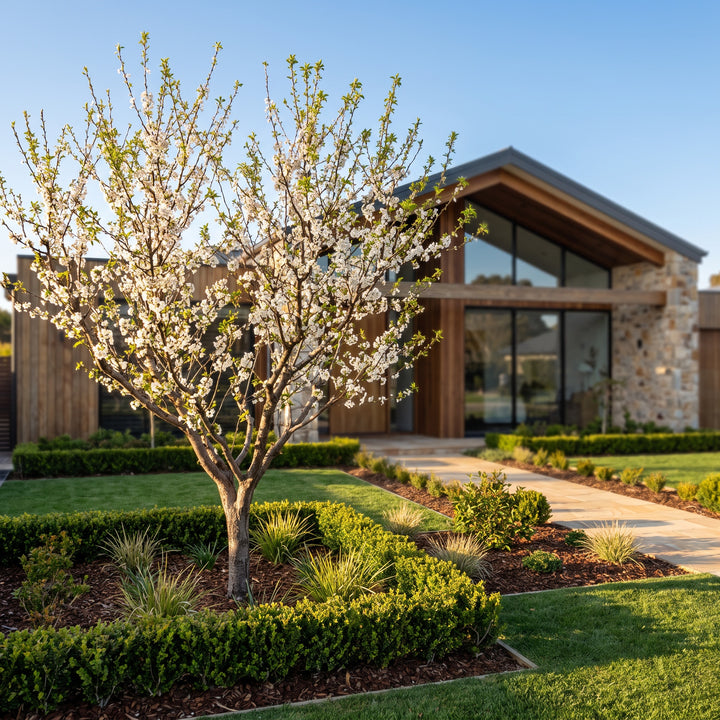
Plum
Angelina Prunus domestica
From $42.95
Plant collection
A feature tree is the plant people look at first. That is a different job from screening a fence line, and it changes what you buy. One specimen, sited where you will see it, with room for its full shape. Think front garden anchor, shade over a deck, a courtyard where everything else stays low. Ten identical plants in a row belong in the hedging range, since the branching that makes a specimen worth planting disappears when trees stand shoulder to shoulder.
Crabapple and zelkova hand you the year in four parts. Bare winter structure, spring leaf, summer shade where the western wall needs it, then a fortnight of raking. The catch is July. The tree is a skeleton then, and if it stands in a sightline you use daily, it has to be worth looking at. Chinese elm is the exception, bare through a Canberra winter but hardly defoliating through Brisbane and the northern rivers. An evergreen magnolia holds the same green mass every month and takes full sun or part shade. Deciduous for winter light into the house, evergreen for a view that stays put.
Through Brisbane and the northern rivers, olives run leggy in the humidity and fruit poorly. Crepe myrtle shrugs off a humid summer and flowers through the worst of the heat. Perth's alkaline coastal sand and bone dry February suit an olive, untroubled by lime and needing little water once established. Ripe fruit stains, so keep it off a pale path. Around Ballarat and in the Southern Highlands, hard frost is not something a subtropical tree grows out of. Frangipani and black palm die there in year one, and in year ten. The fix is a different tree, not more frost cloth. Crabapple takes hard frost and pays you back in blossom. Zelkova and Italian cypress hold up in cold gardens, and magnolia Elizabeth is hardy in the wood, though a late frost browns its open flowers. Melbourne's western clay sets hard in February and holds water in August. Plant on a raised mound, not in a pit that fills like a bathtub.
Bigger is not automatically better. A 300mm pot holds roughly fifteen litres of mix, already a substantial plant, and stock that size settles in quickly. Very large stock buys presence on day one and asks for two summers of attentive watering, because the root ball is small against the canopy above it. Nobody home in January? Start smaller. Cost follows the years a grower held a tree and the work of training it. A grafted specimen in a 400mm pot can cost more than a fast growing native in a much bigger one.
Most failures are placement. Trees go in a metre off a slab, over the sewer line, or against a driveway, and come out in year eight. Work out how wide the canopy can get before it touches something, then plant for that. For six to eight weeks after planting the roots sit inside the mix they arrived in, a sharply drained volume that can hit wilting point in three days at 35 degrees however wet the surrounding soil is. Soak that root ball directly. Two or three times a week through a hot summer. Taper to weekly for the rest of the season, then fortnightly, and stretch the frequent phase out for large stock. Mulch a wide circle, keep it off the trunk, and take the stakes off after the first year.
Sizes here already run a long way up. Advanced trees is the same stock sorted by grade rather than by role. For a native anchor with good bark and birds in it, gum trees runs from small eucalypts to paddock species.
Choose from quality plants, compare options quickly, and use the filters to narrow the range by what matters most.
Angelina Prunus domestica
From $42.95

Platanus x acerifolia PLATANOR Vallis Clausa
From $229

Platanus x acerifolia Bloodgood
From $239

Platanus x acerifolia
From $119

Platanus orientalis Digitata
From $30.95

Olea europaea Del Morocco
From $179
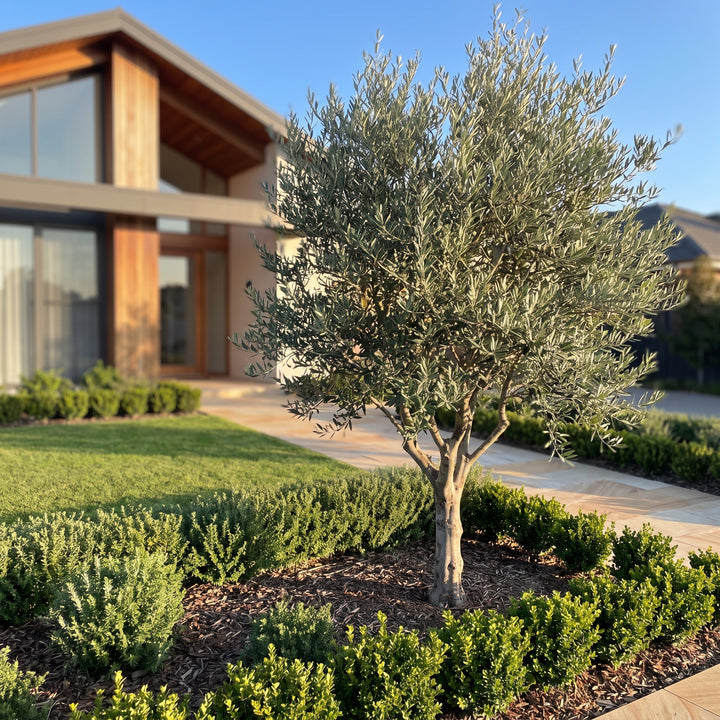
Olea europaea Correggiola
From $17.95

Nyssa sylvatica Red Red Wine
From $55.95

Nyssa sylvatica NXSXF Forum
From $55.95

Melia azedarach Lilac Lady
From $199
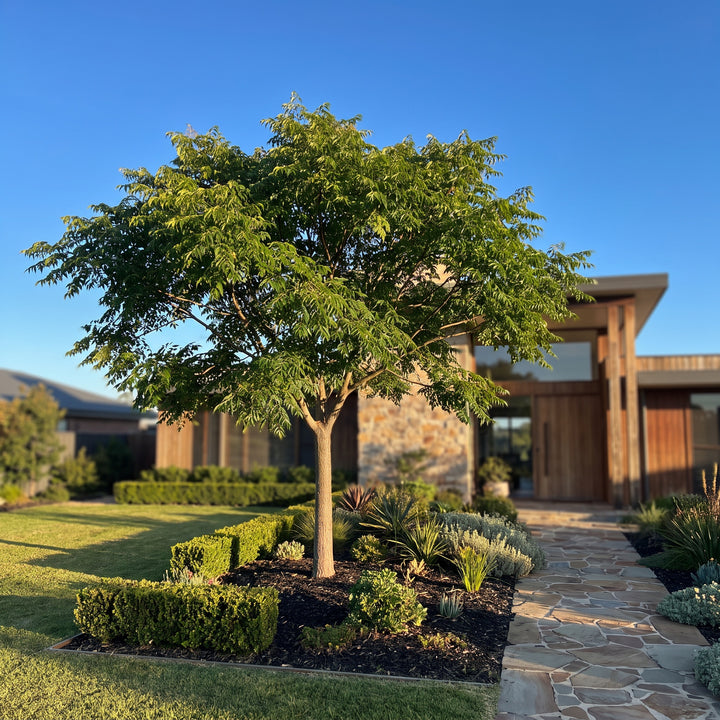
Melia azedarach Elite
From $549

Malus tschonoskii
From $99.95

Malus floribunda Crab Apple
From $129

Magnolia x soulangeana Genie
From $71.95
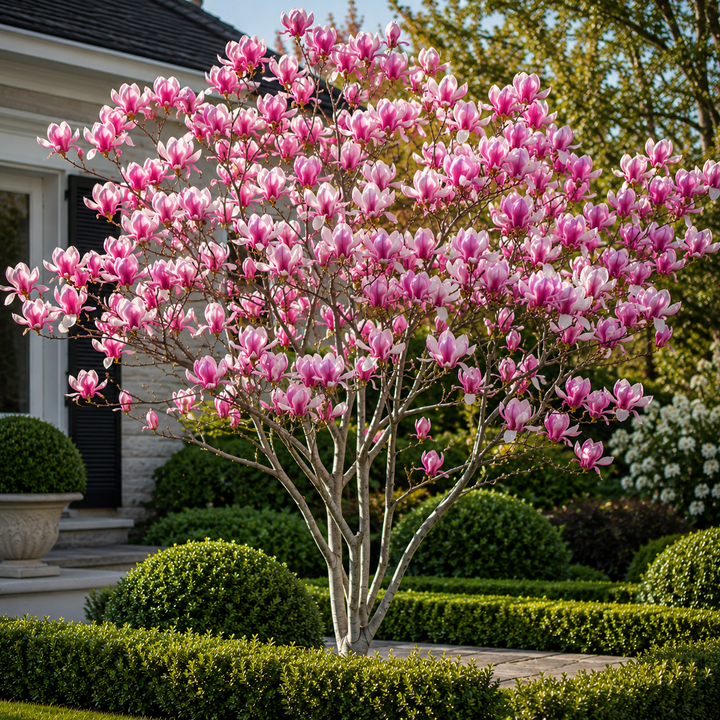
Magnolia x. soulangeana
From $32.95

From $549

From $50.95

From $48.95

Magnolia soulangeana Honey Tulip
From $71.95

From $149

Magnolia grandiflora Sweet Carolina
From $149
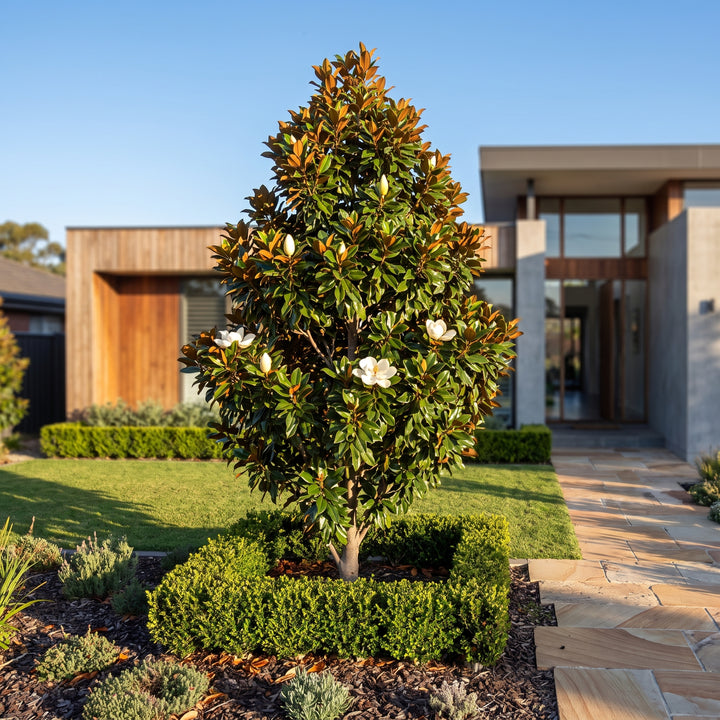
Magnolia grandiflora Sweet and Neat
From $46.95

Magnolia grandiflora Greenback
From $169

From $49.95

From $129

From $78.95

From $199

Macadamia integrifolia Pinkalicious
From $83.95

Liriodendron tulipifera Fastigiata
From $65.95
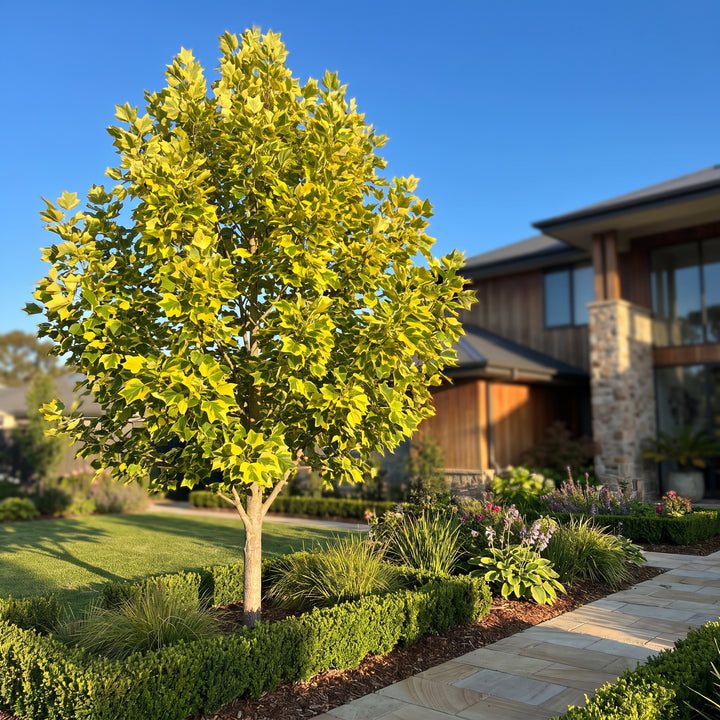
Liriodendron tulipifera Aureomarginatum
From $65.95
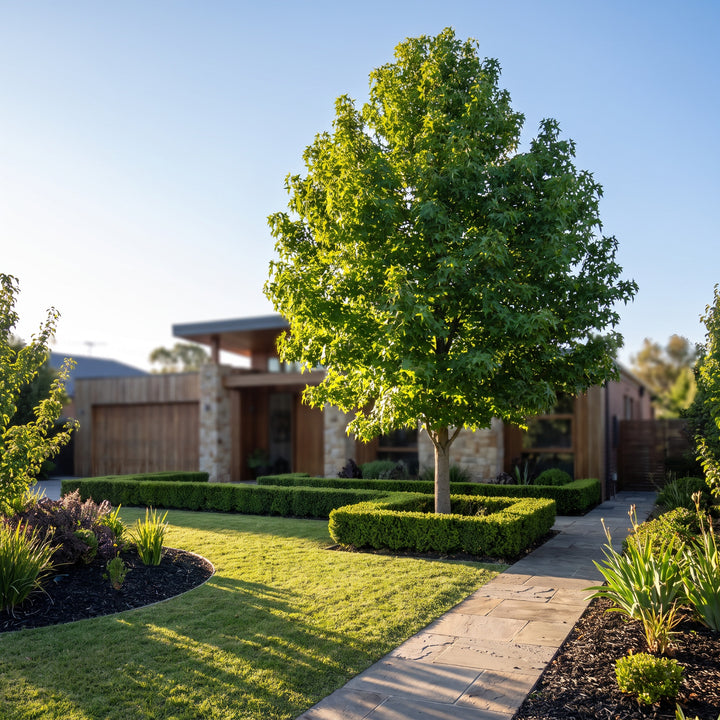
Liquidambar styraciflua Worplesdon
From $109

Liquidambar styraciflua Oakville Highlight
From $259
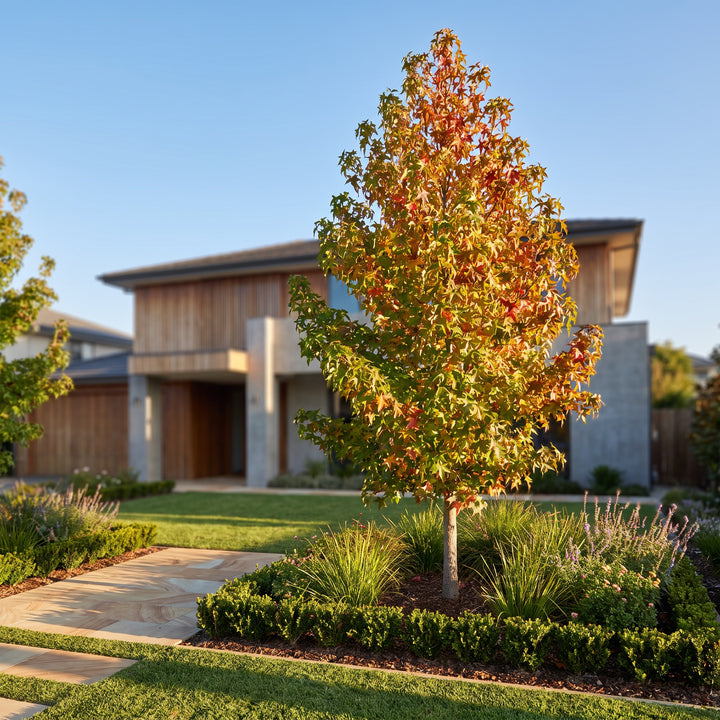
Liquidambar styraciflua Hilleri
From $109

Liquidambar styraciflua Canberra Gem
From $109

Liquidambar styraciflua Burgundy
From $109

Liquidambar formosana Evergreen
From $109
Use this collection to compare plants by size, style, growing conditions, and the result you want to create. Whether you are upgrading a garden, styling a patio, adding privacy, or refreshing an indoor space, choosing from a focused collection makes it easier to find the right fit.
Before ordering, consider light exposure, watering needs, mature size, and where the plant will be positioned. These details help you choose plants that look good now and continue performing over time.
Shopping within a dedicated collection helps you focus on plants that suit a specific use, look, or garden goal. Use the filters and product details to compare options, then choose the plant that best matches your space.