

Olive
Olea europaea Manzanillo
From $17.95
Plant collection
Low maintenance is a brief, not a plant type. These plants hold their shape without staking or watering every second evening. Buy from here for a driveway edge, a nature strip, any bed you drive past more than you walk through. Wrong page if you want succession colour. Low maintenance describes year two onwards. Year one is still work.
Most failures start the same way: chosen on looks, planted in ground that never suited them. Santolina and convolvulus come out of dry summer country around the Mediterranean, and blue chalksticks is South African. All want sharp drainage and a crown that dries out. Cracking black clay in Melbourne's west and humid Brisbane nights work against them. Plant Blue Chalksticks raised, in gritty mix or a pot, or leave it out. Do not use leaf colour as the test. Westringia Zena is grey-green and takes clay, salt wind and humidity; the silver eremophilas are arid-zone Australians. Strappy foliage is the workhorse. Lomandra and dianella handle clay, coastal sand, salt and half a day of shade, which is how they carry a garden in Perth's alkaline sand. Poa labillardieri is different: a creek-flat grass from south-eastern Australia, at home in heavy soil and Southern Highlands frost, wrong for Perth limestone.
Pot size decides how finished the bed looks on day one. A 140mm pot holds about a litre and a half of root, a 200mm four and a half litres, a 300mm nearer fifteen: a plant you lift with two hands. Small pots planted thickly beat a few large ones: three or four 140mm lomandra or dianella per square metre close over in two summers, 5L stock at two or three. A drift of one variety reads as deliberate, and a closed leaf canopy is the only weed suppression left once the mulch breaks down. Westringia Zena comes in 140mm, 200mm and 300mm, so a long low line can go in as small pots with two big ones at the corners.
Plant in autumn if you can, no deeper than it sat in the pot, mulched coarse and thick, kept off the stems. One deep soak a week drives roots down, and autumn-planted stock will run on that through its first summer. Plant in spring or summer and it is two or three a week for six weeks, because a litre and a half of root ball does not last seven days at thirty-five. A daily sprinkle keeps roots shallow, and the first hot windy week finds them out.
After that the work is small, but some of it wants gloves. The euphorbias bleed a caustic latex that burns skin and can injure an eye, Euphorbia milii is spined as well, and the trimmings poison dogs and cats, as does blue chalksticks. Agapanthus sap irritates skin, and the older seedling forms set seed heavily, so cut spent stems before they dry, especially if you back onto bushland. Gazania is declared in South Australia, restricted for sale and movement. Fruiting olives are bird-spread into bushland and count as an environmental weed in South Australia and parts of Victoria and NSW. Pick the fruit. Lomandra and poa build dead thatch after three or four years and want one hard cut, back to about a third of their height, in late winter or just after the spring flowers fade. Kangaroo paw fans blacken in humid weather; cut them out at ground level, spraying does little.
Kangaroo paws give more flower on the same water, though they want a feed in spring and again after the first flush or the spikes come thin. For a hot courtyard or rockery on sand, succulents go further. Dry shade under an established tree, where much of this page will sulk, belongs to liriope and mondo grass.
Choose from quality plants, compare options quickly, and use the filters to narrow the range by what matters most.
Olea europaea Manzanillo
From $17.95

Lomandra longifolia Dalliance
From $19.95

Dracaena marginata
From $16.95

Cordyline stricta
From $16.95

Dietes grandiflora
From $16.95
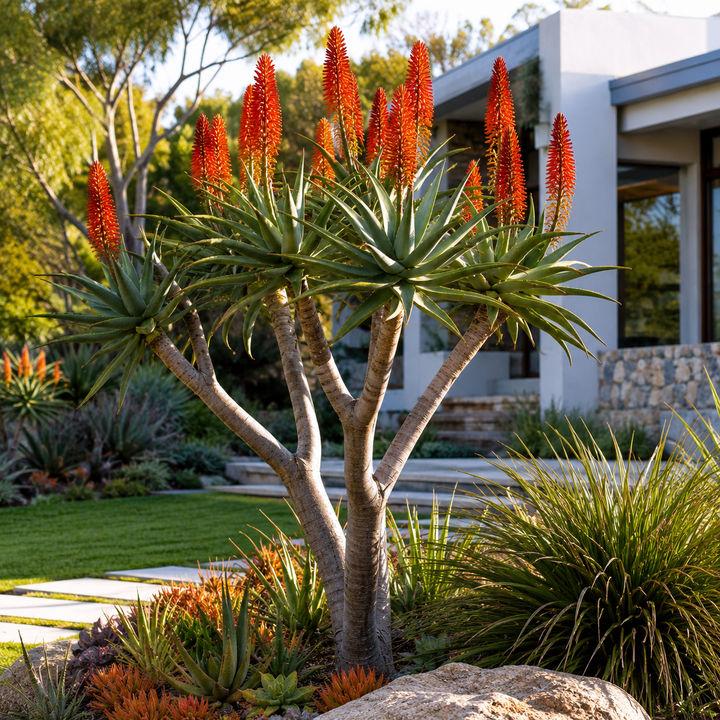
Aloe barberae
From $189

Olea europaea
From $16.95
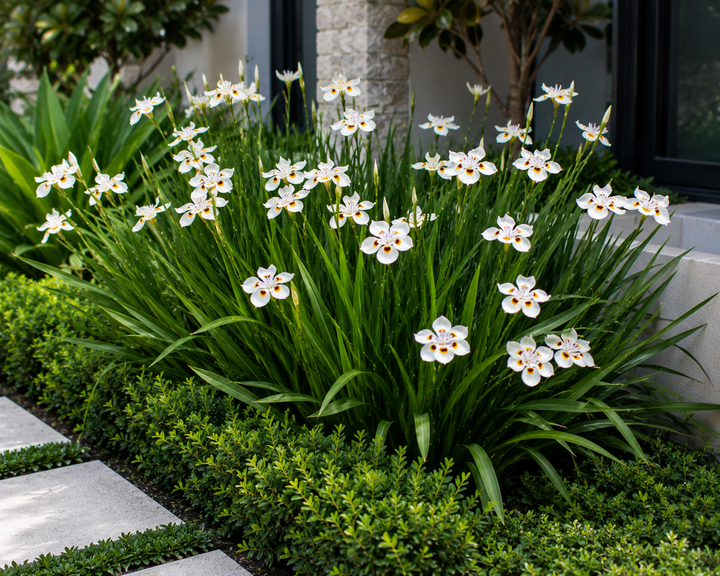
Dietes bicolor (Moraea bicolor)
From $16.95

Yucca Elephantipes
From $16.95
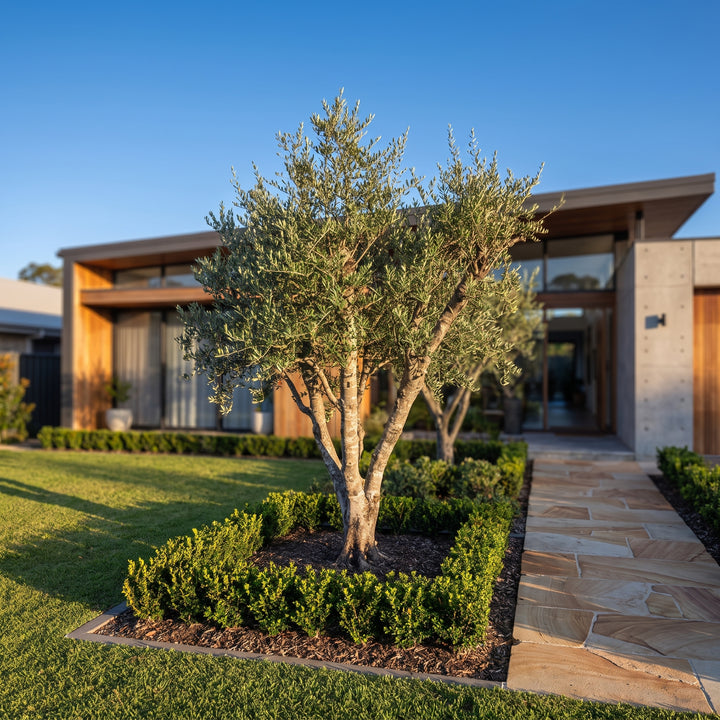
Olea europaea Frantoio
From $18.95

Juniperus conferta
From $16.95

Olea europaea Tolleys Upright
From $26.95

Camellia japonica Brushfields Yellow
From $16.95

From $16.95

Westringia hyb. NARINGA
From $16.95
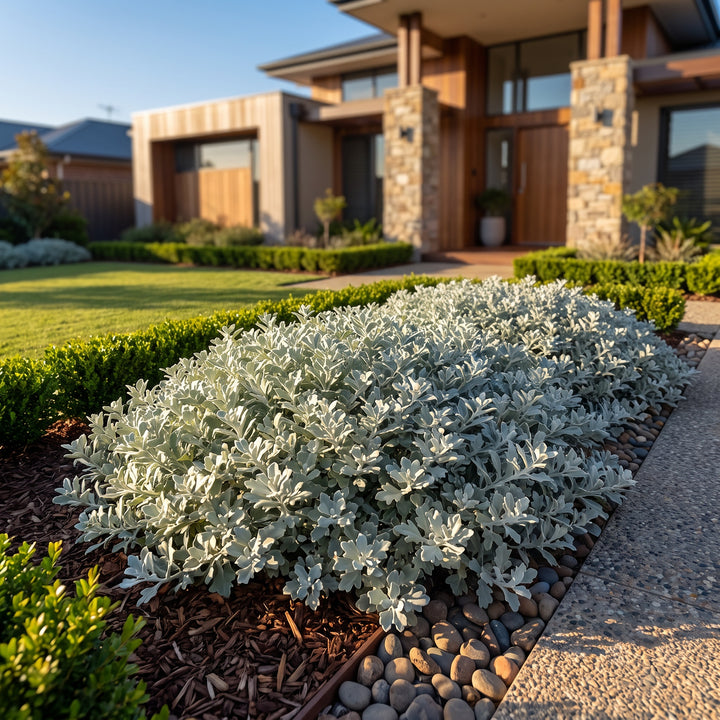
Rhagodia spinescens Creeping Saltbush
From $16.95

Poa sieberiana
From $16.95

Poa poiformis var. poiformis
From $16.95

Poa poiformis KINGSDALE
From $16.95

Poa labillardieri Eskdale
From $16.95

Phormium Yellow Wave
From $16.95

Phormium tenax Anna Red
From $16.95

Phormium Purple Haze
From $16.95

Osteospermum Serenity Rose Magic (Dimorphotheca)
From $16.95

Osteospermum Serenity Red (Dimorphotheca)
From $16.95

Osteospermum Power Packed Blue (Dimorphotheca)
From $16.95

Osteospermum 3D Deep Sun (Dimorphotheca)
From $16.95

Olea europaea Del Morocco
From $179
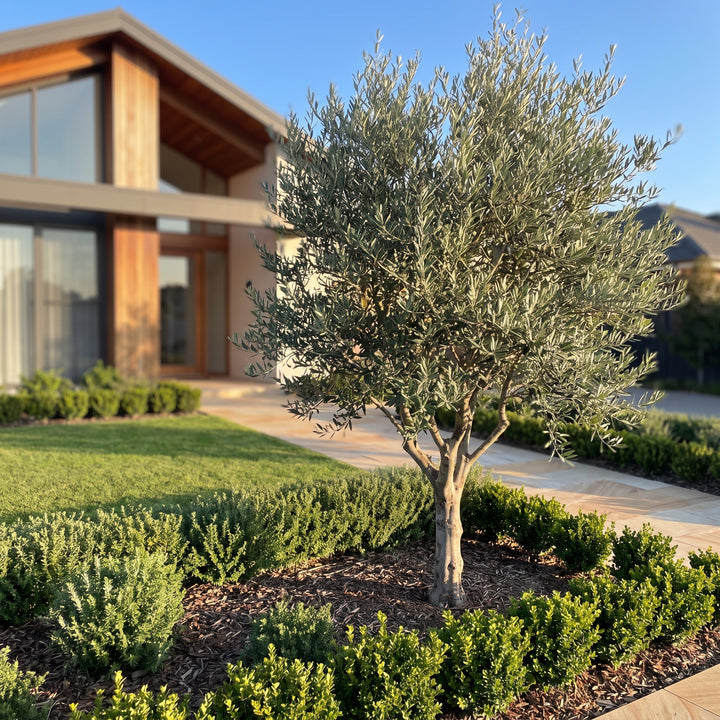
Olea europaea Correggiola
From $17.95

Nandina domestica Twilight
From $17.95

Myoporum insulare
From $16.95

From $23.95

From $21.95

Liriope muscari ISABELLA®
From $16.95

The Princess Lavinnova® Lavandula hyb.
From $17.95

Silver Princess Lavandula hyb.
From $17.95
Use this collection to compare plants by size, style, growing conditions, and the result you want to create. Whether you are upgrading a garden, styling a patio, adding privacy, or refreshing an indoor space, choosing from a focused collection makes it easier to find the right fit.
Before ordering, consider light exposure, watering needs, mature size, and where the plant will be positioned. These details help you choose plants that look good now and continue performing over time.
Shopping within a dedicated collection helps you focus on plants that suit a specific use, look, or garden goal. Use the filters and product details to compare options, then choose the plant that best matches your space.